Gil Goren, Worthy of Gratitude
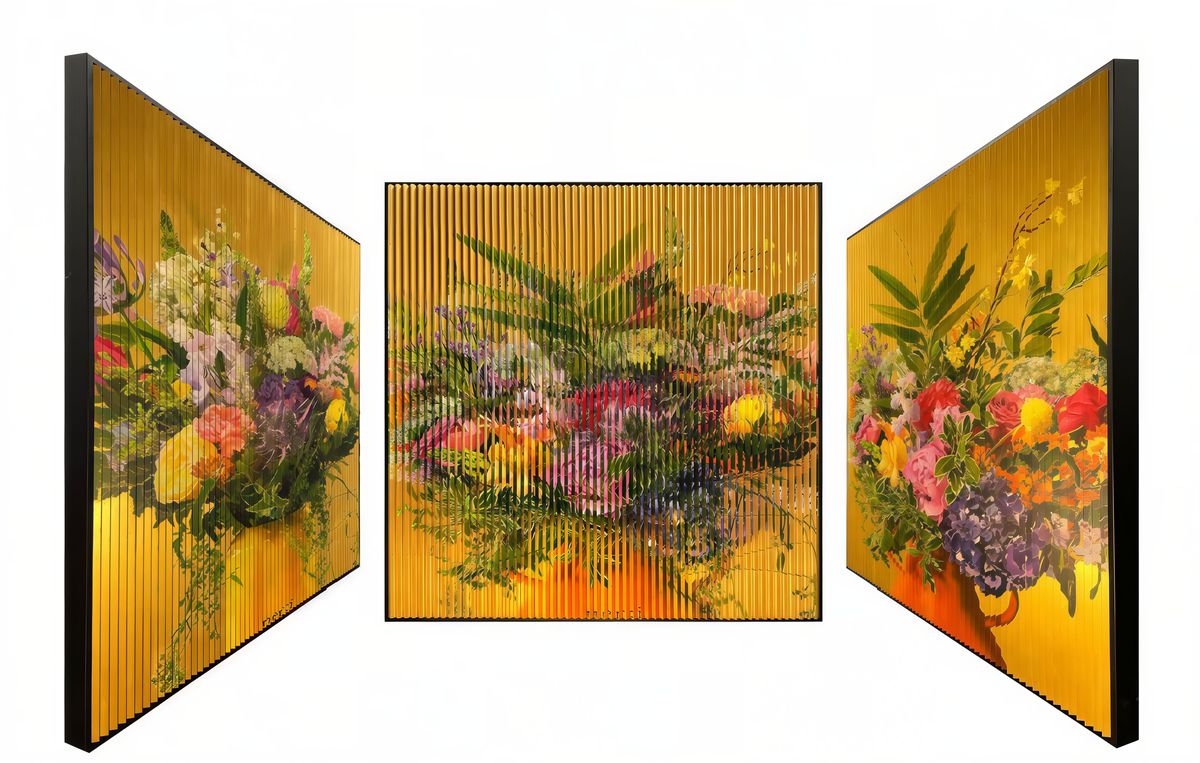
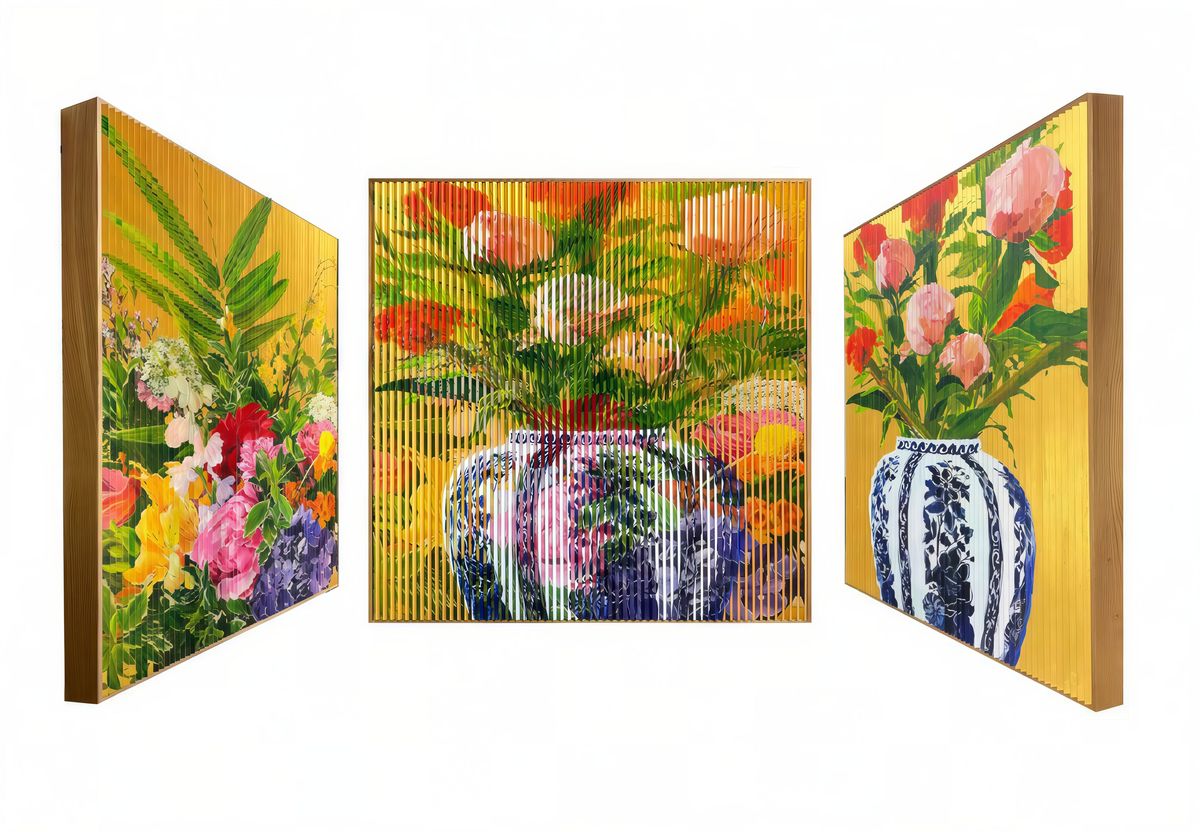
Hadani Gallery presents Gil Goren, an Israeli artist whose paintings change as you move. Goren paints on panels of narrow wooden slats, each with two angled faces, and gives each face a different image. Walk past a work and one bouquet dissolves into another, a flag turns to gold, a word breaks into color. This viewing room follows that idea through his flowers, The Flag, the AMEN series, his paintings of Jerusalem and his recent museum solo show in Haifa.
“To see life as I see it: colorful, generous, and worthy of gratitude.”
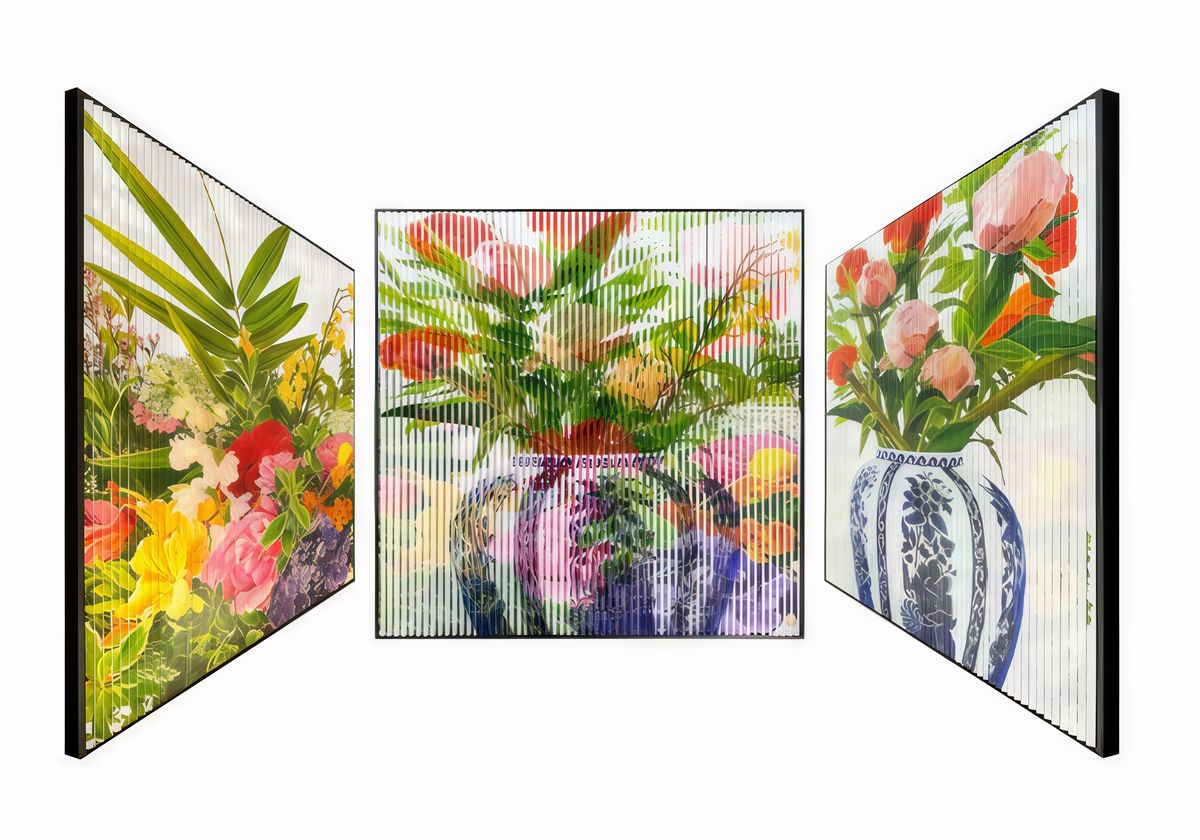
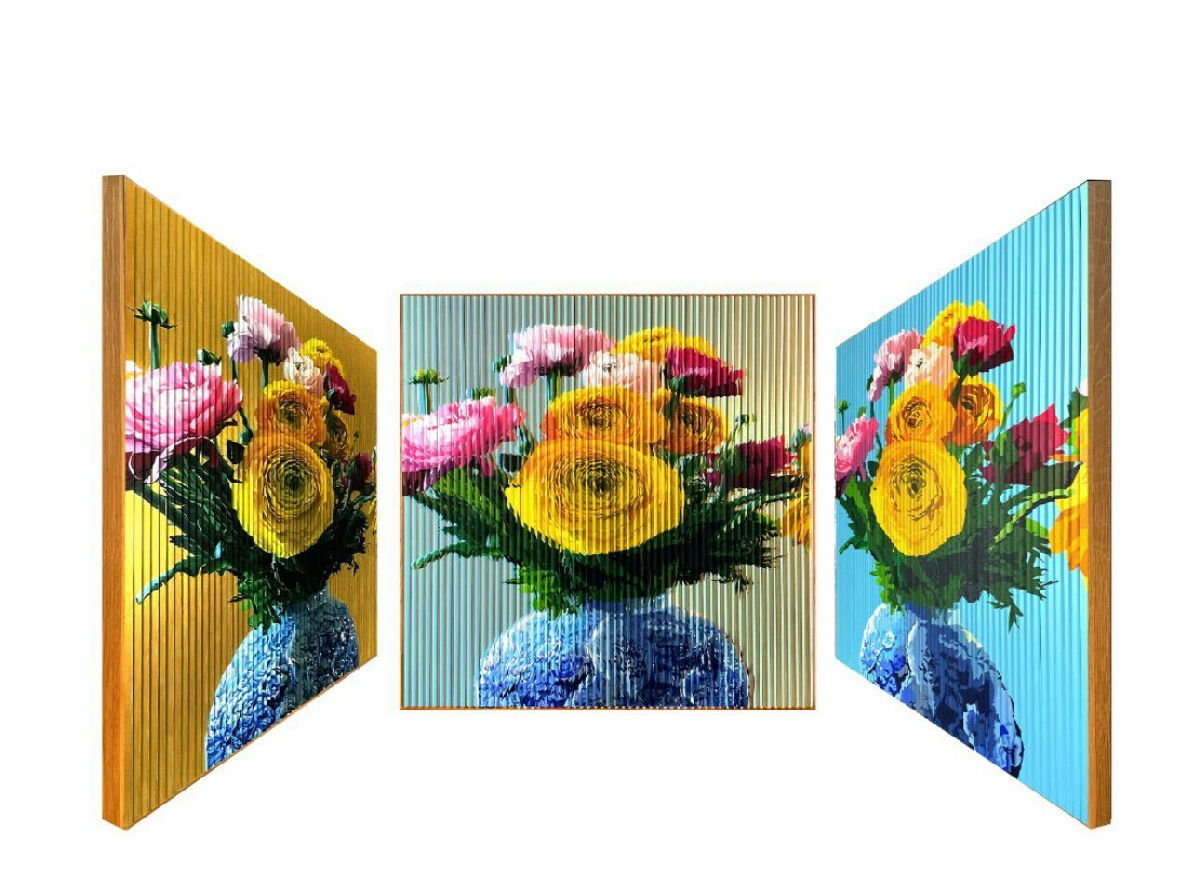
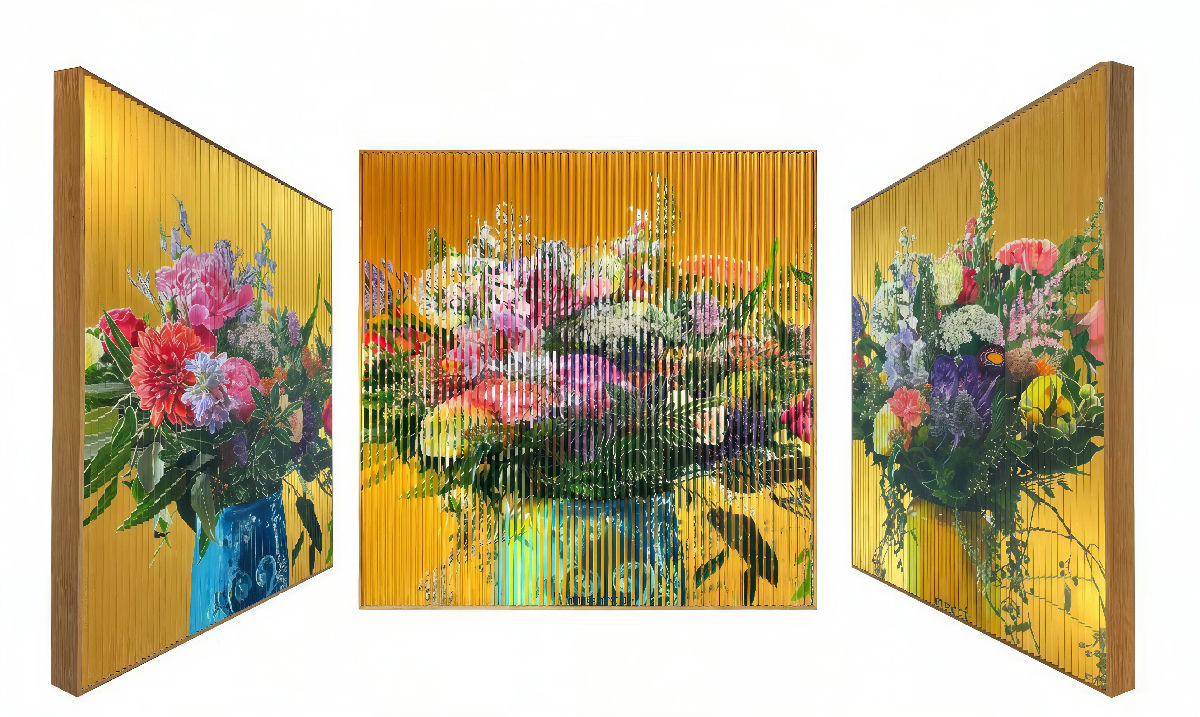
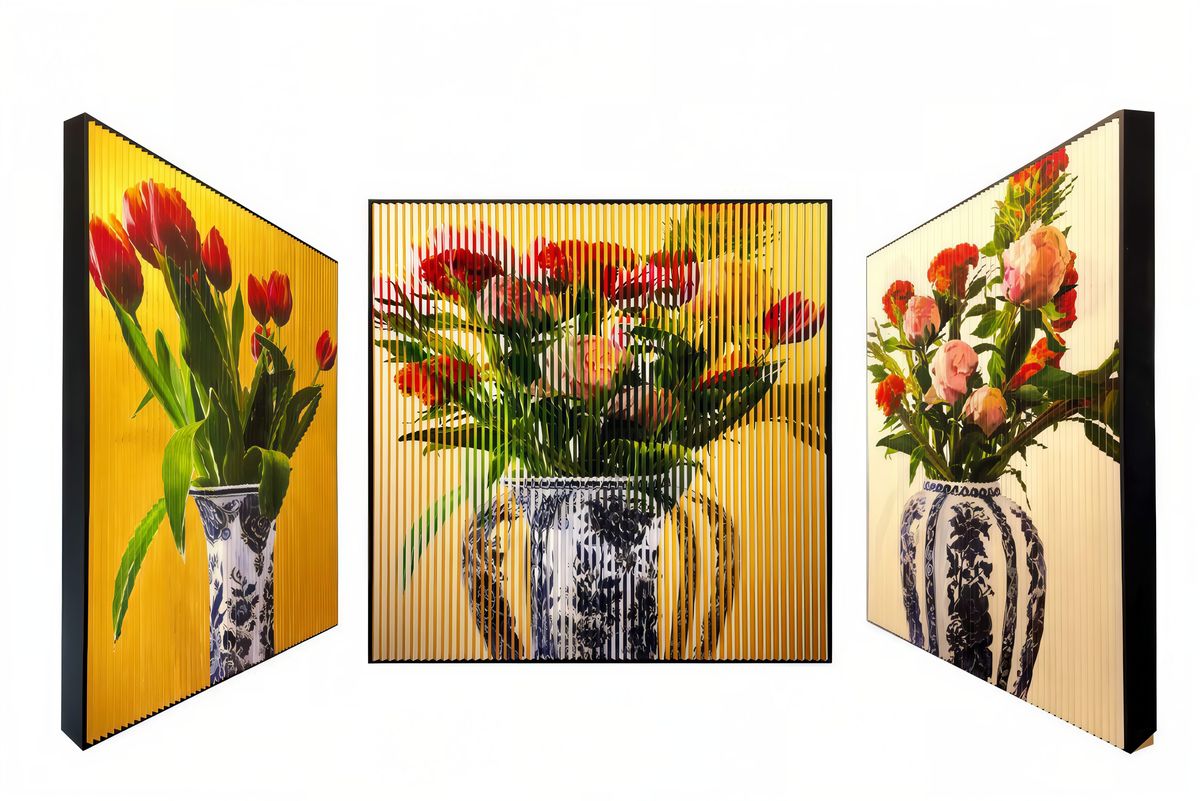
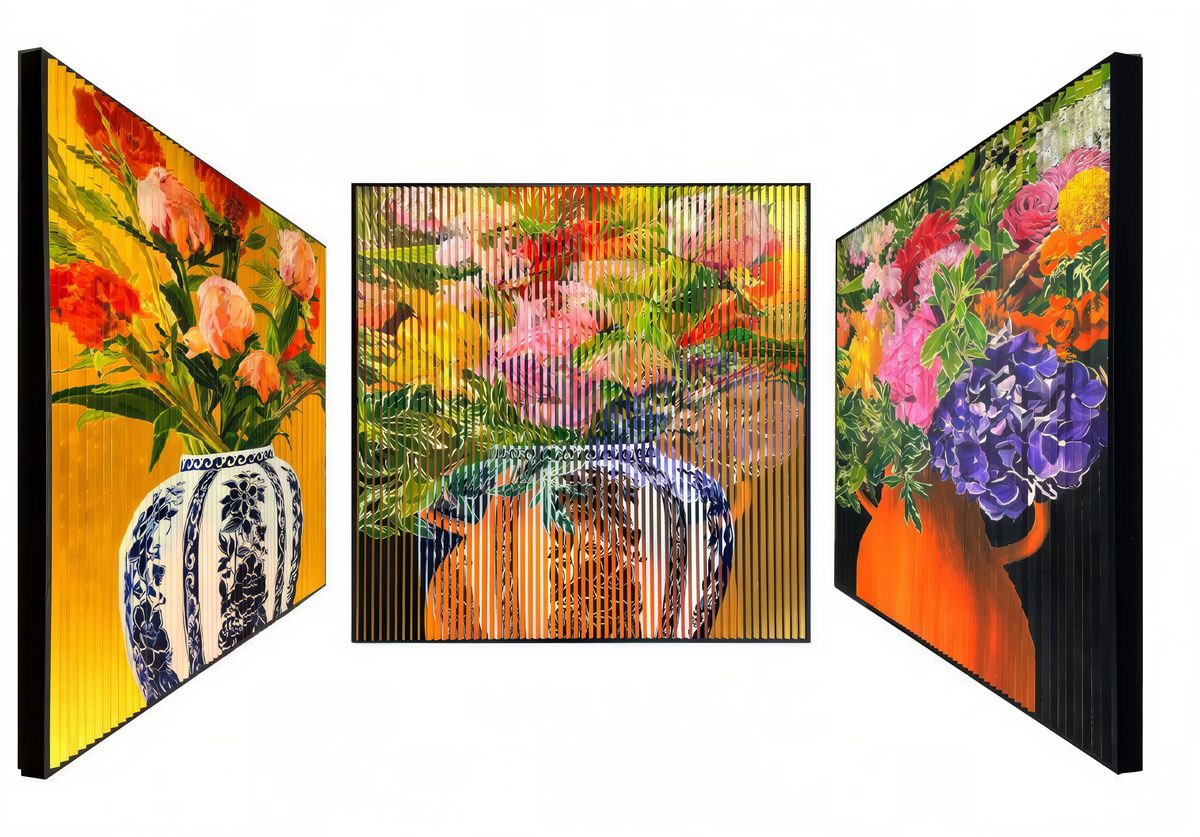
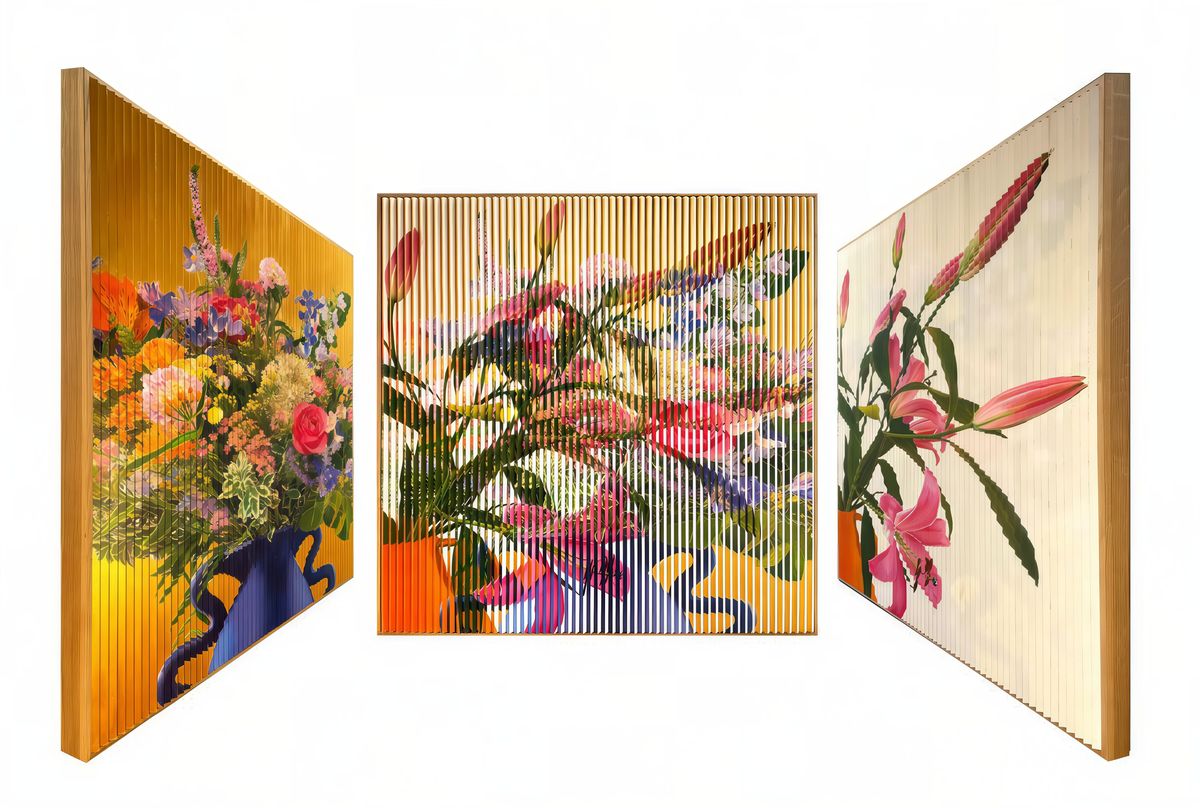
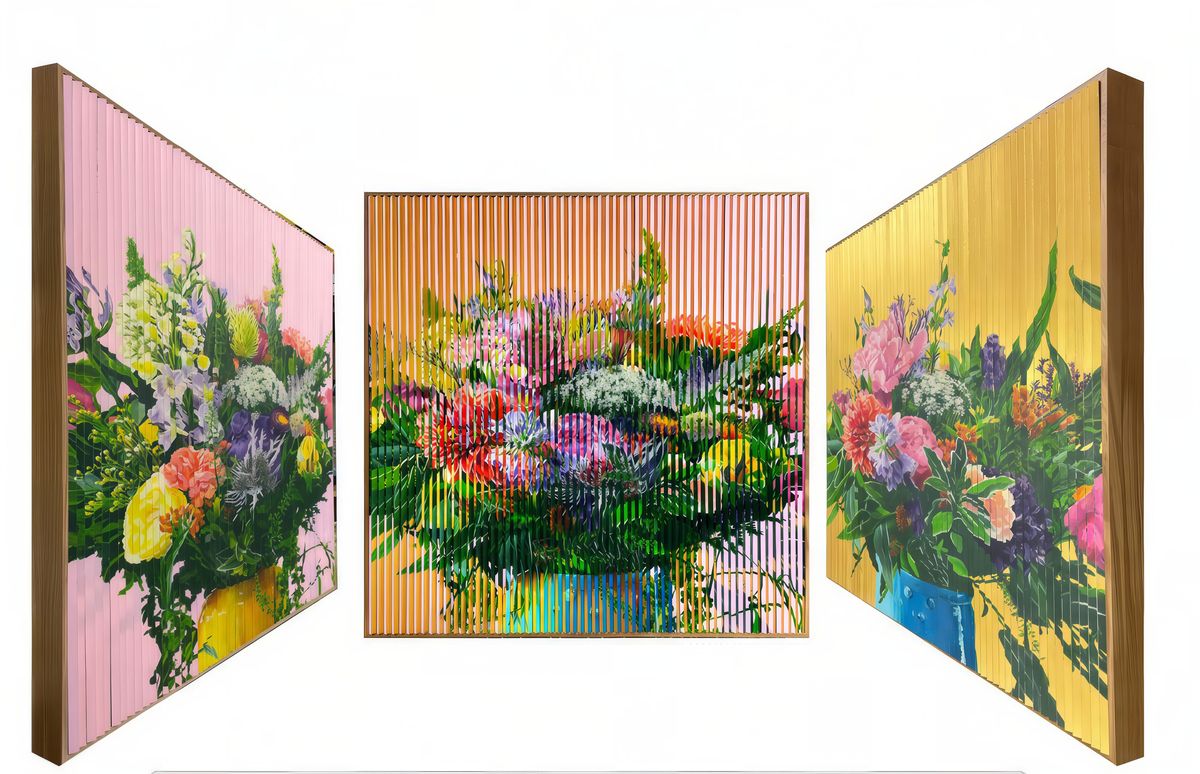
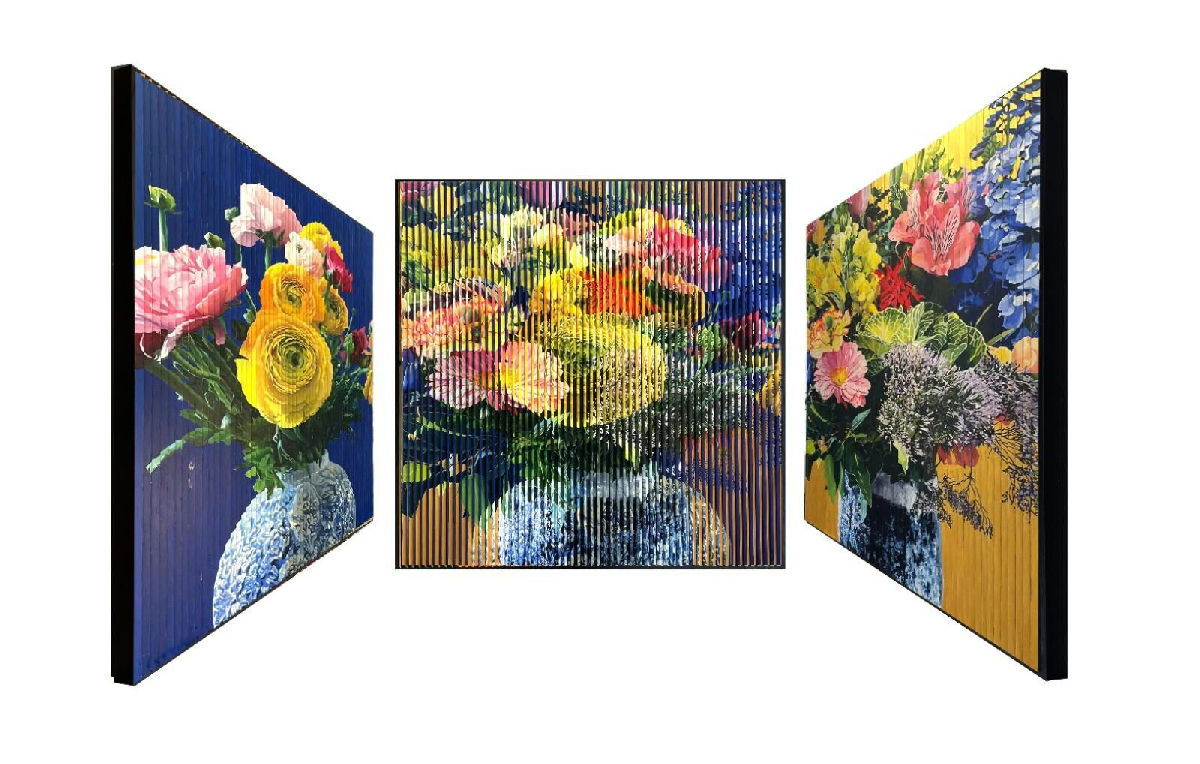
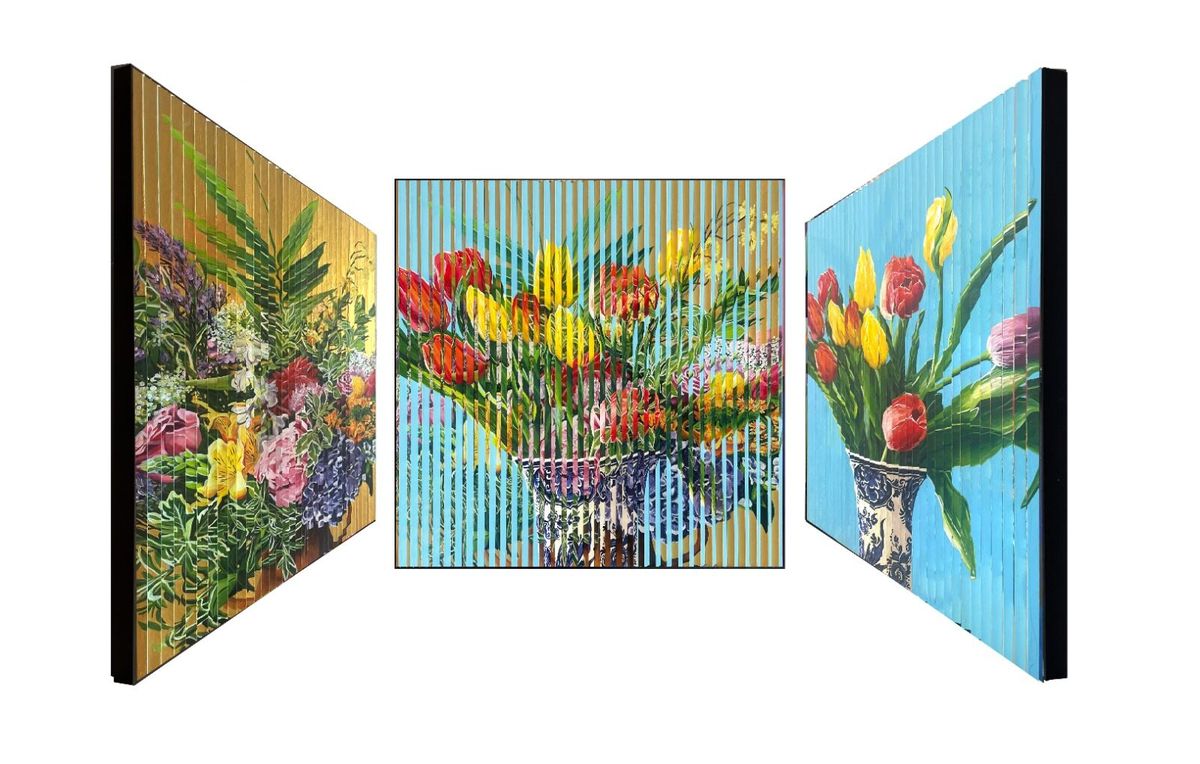
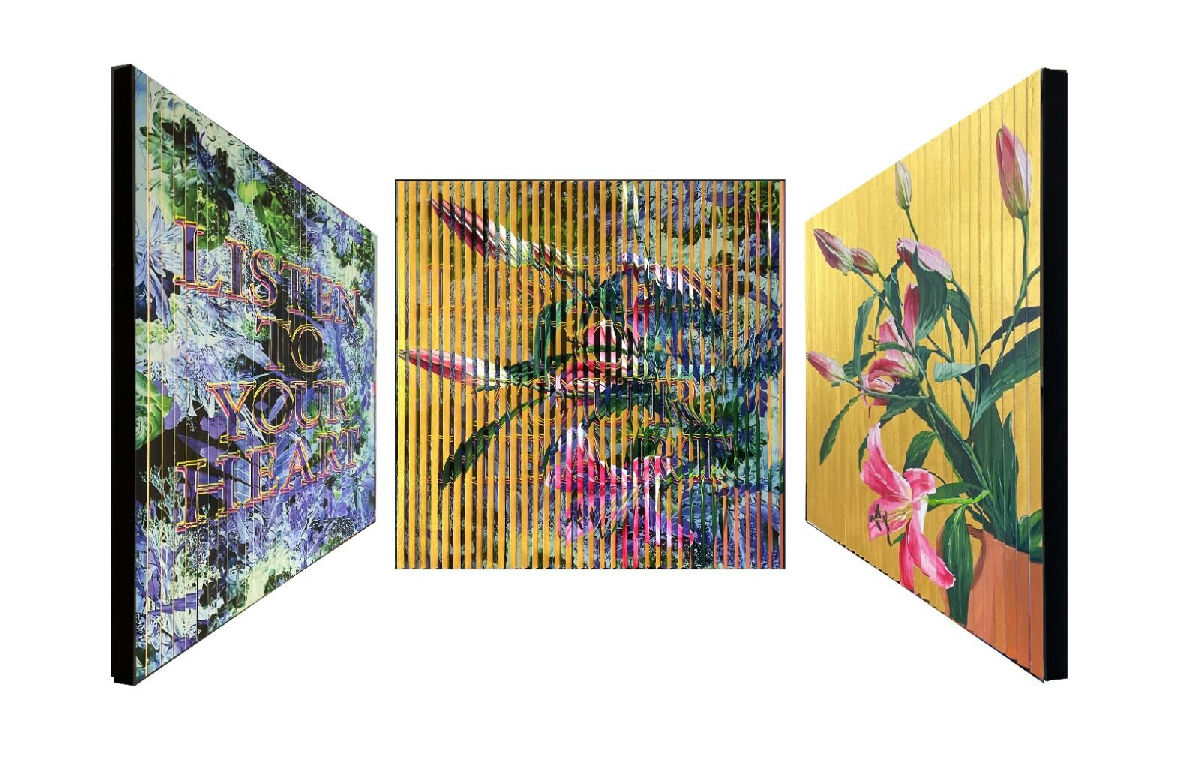
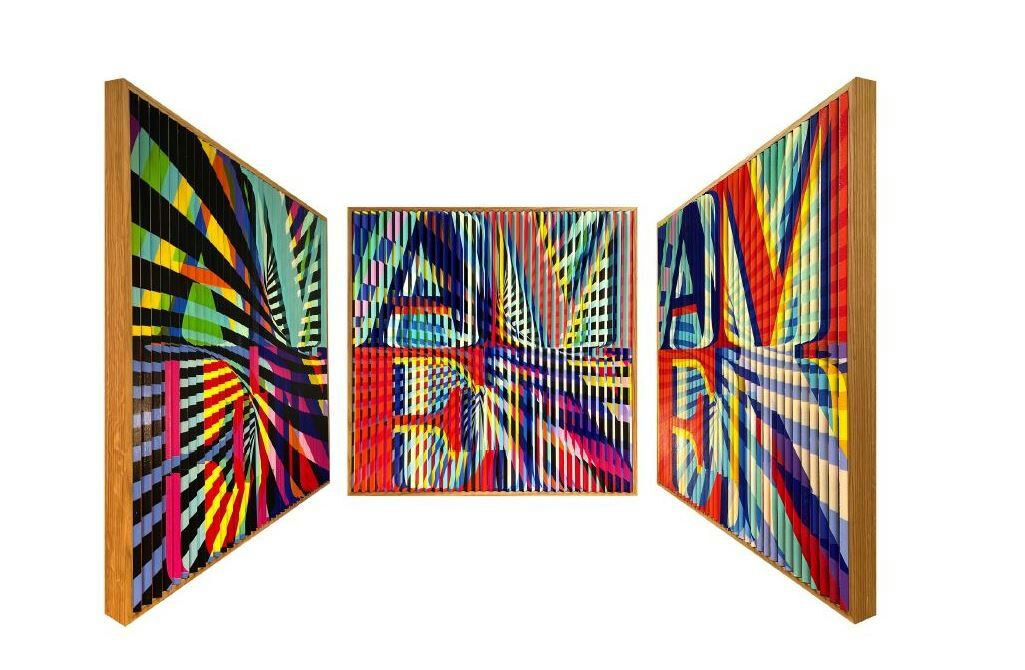
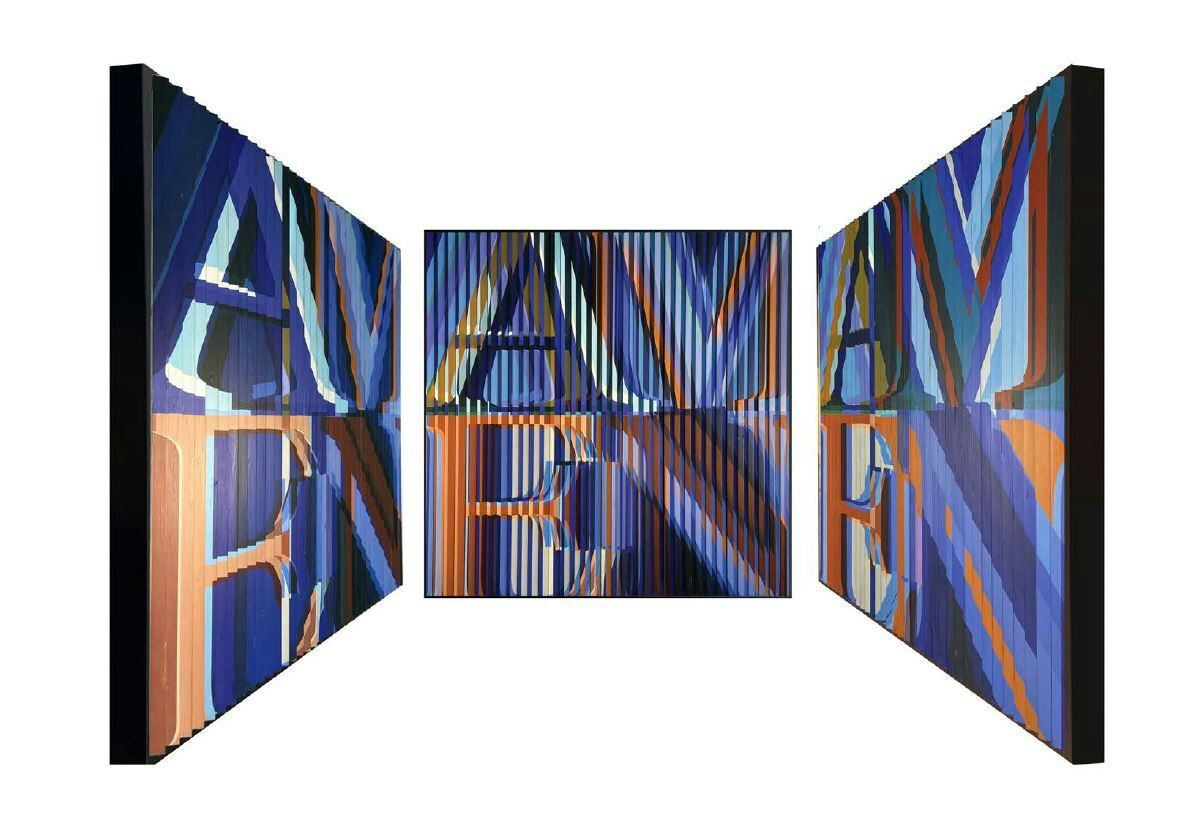
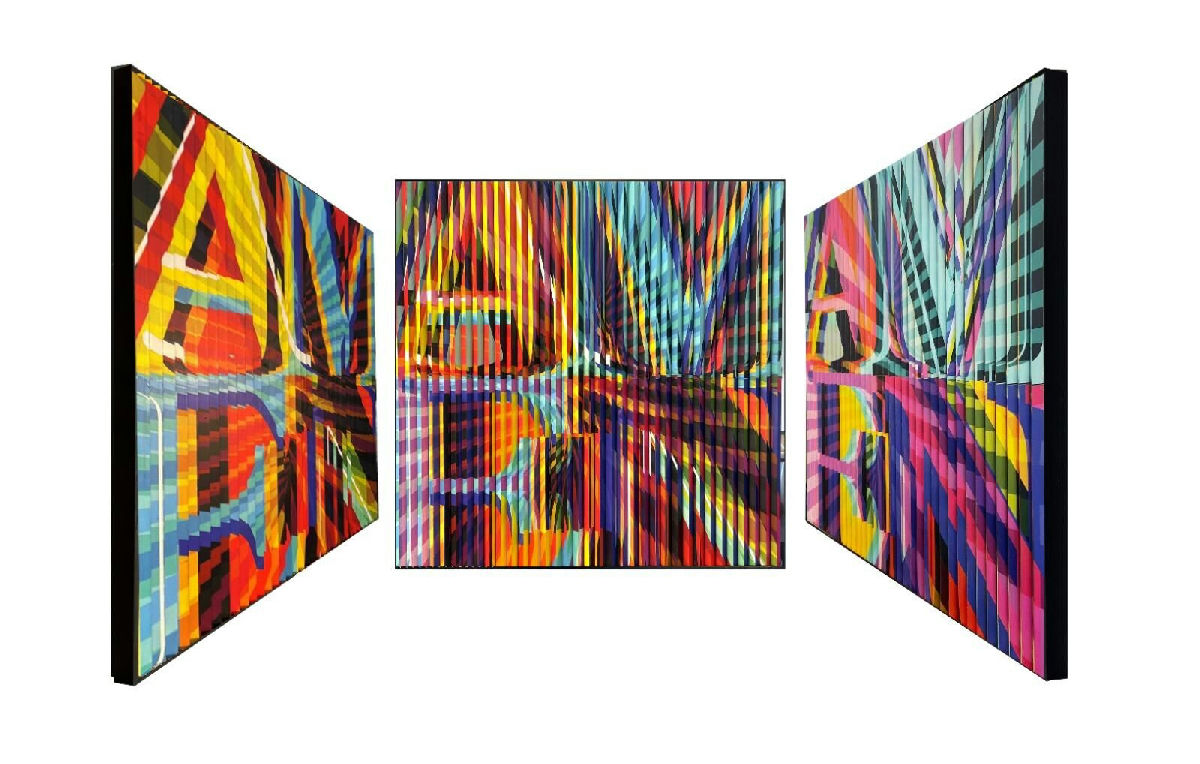
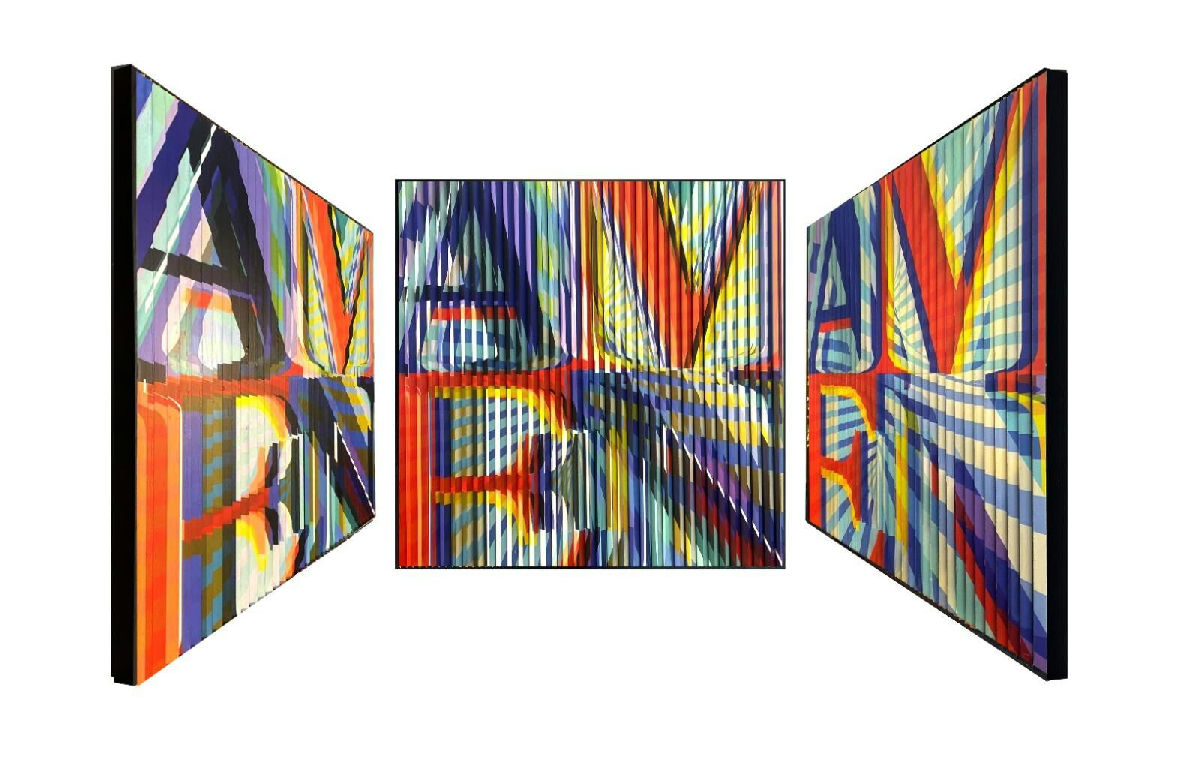
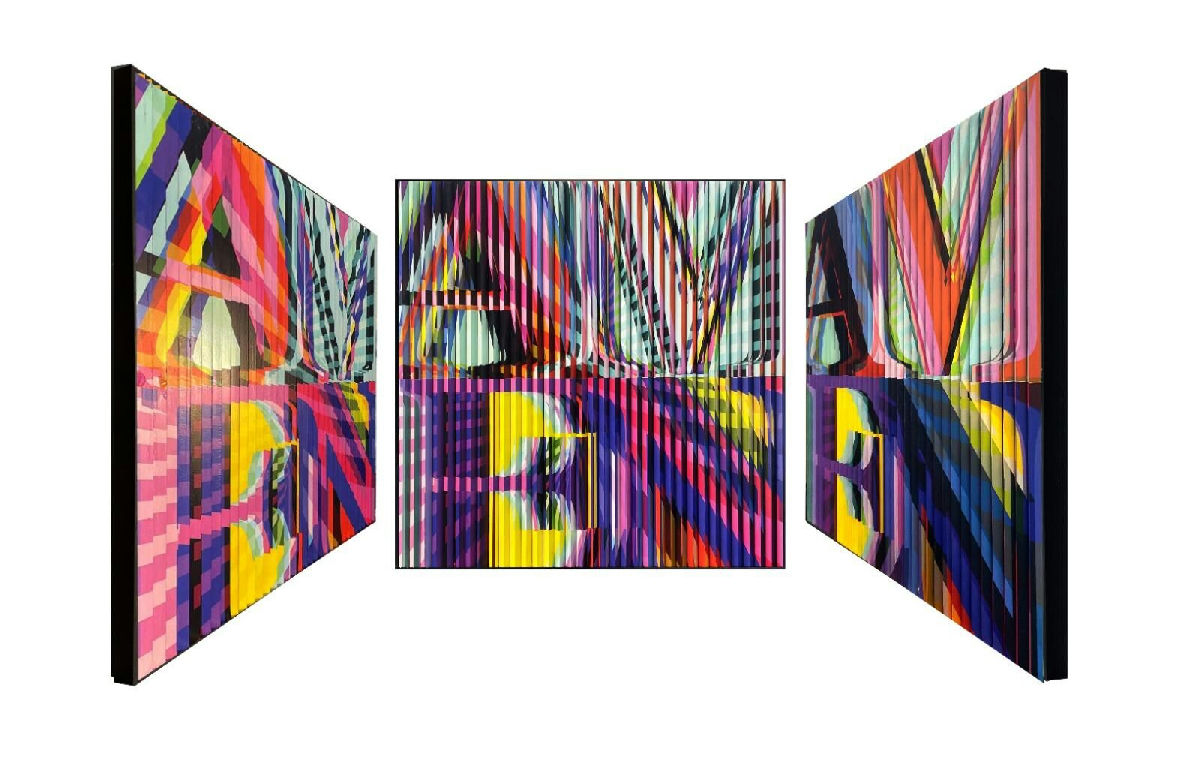
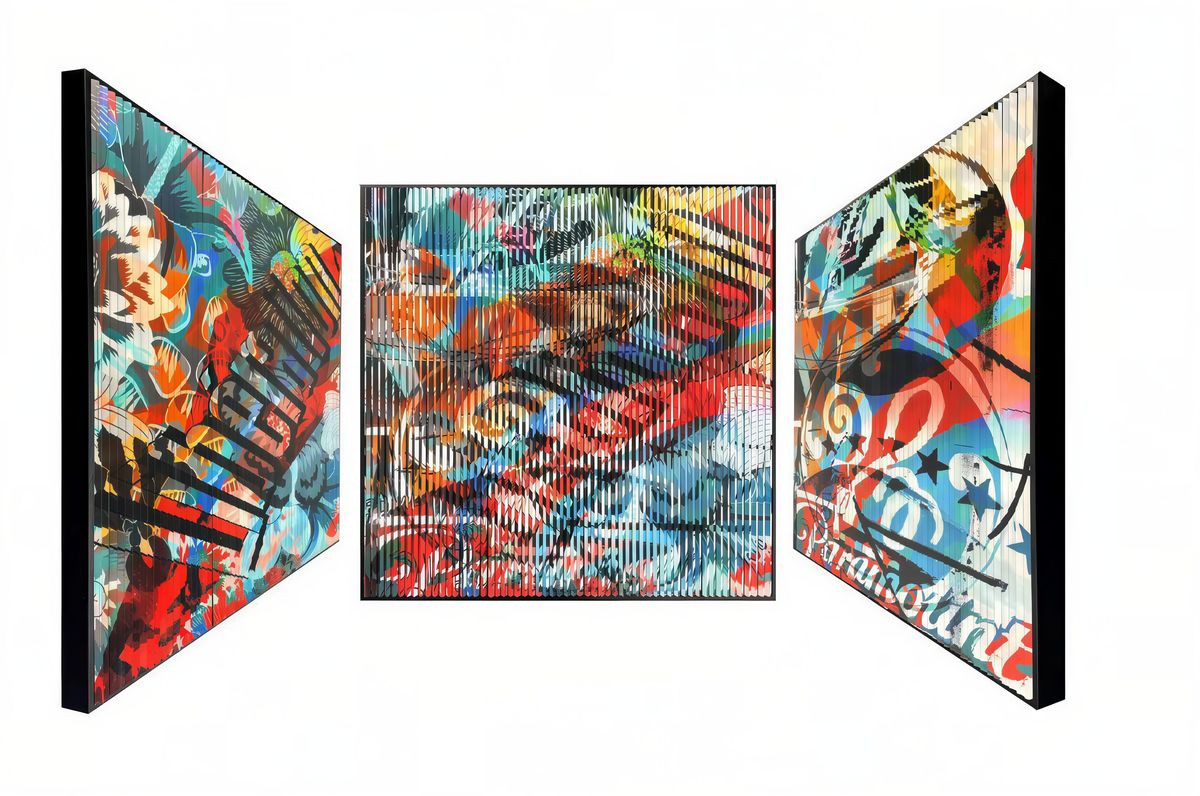
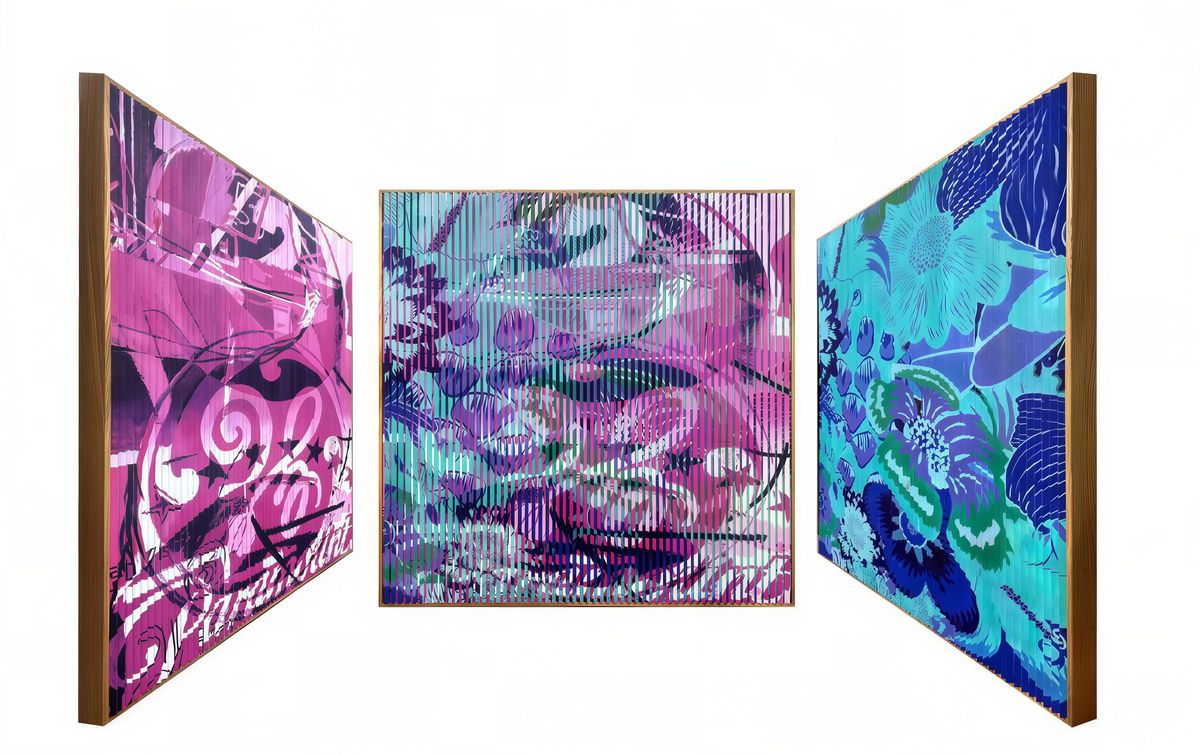
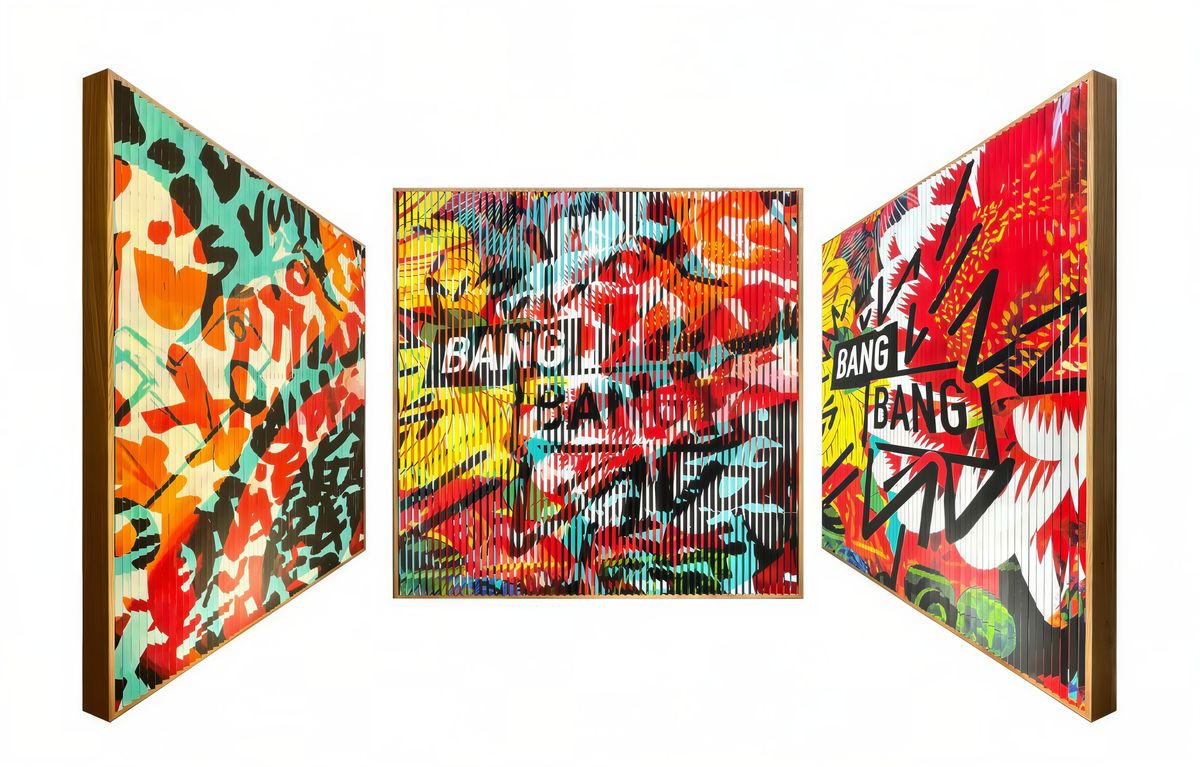
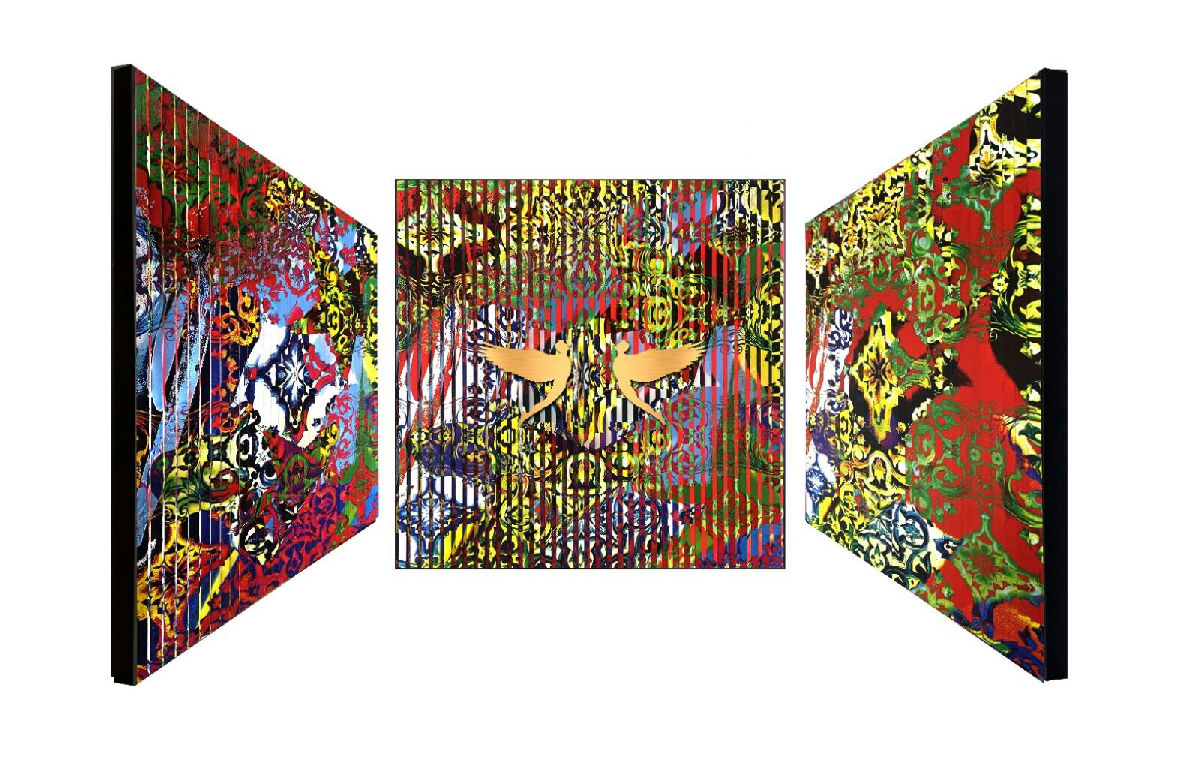
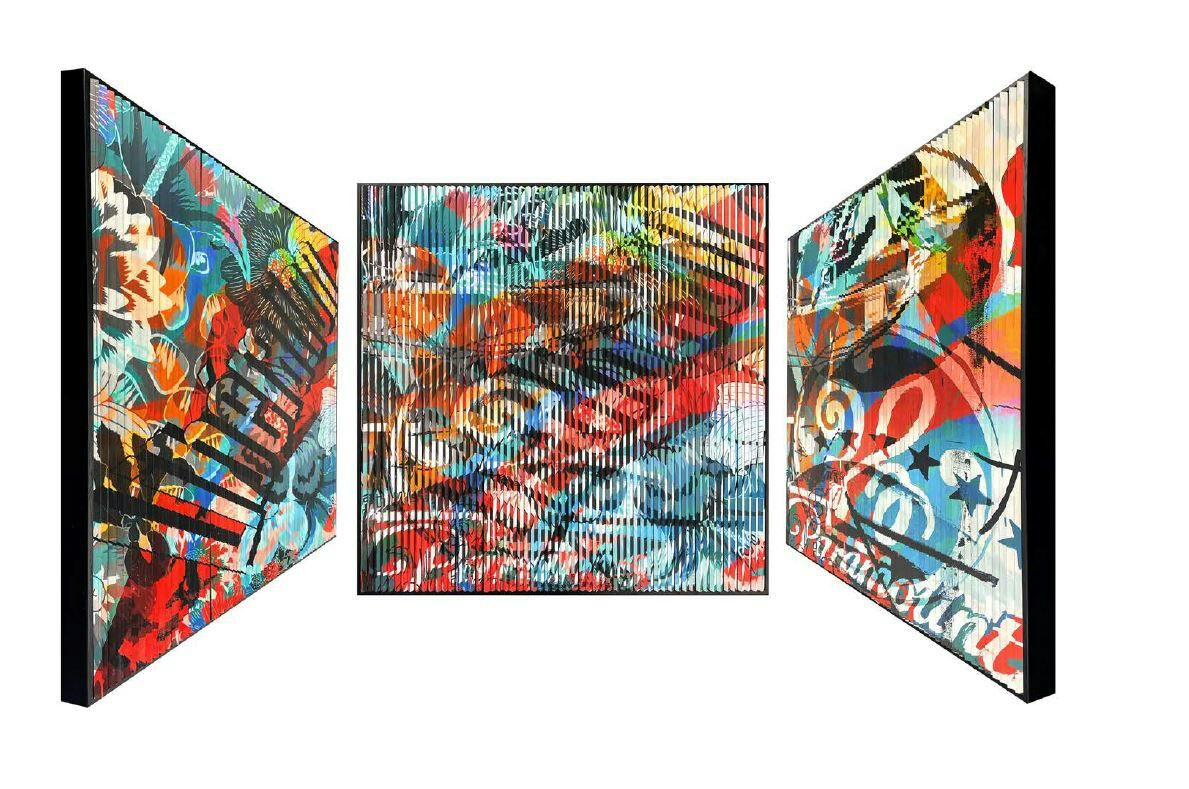
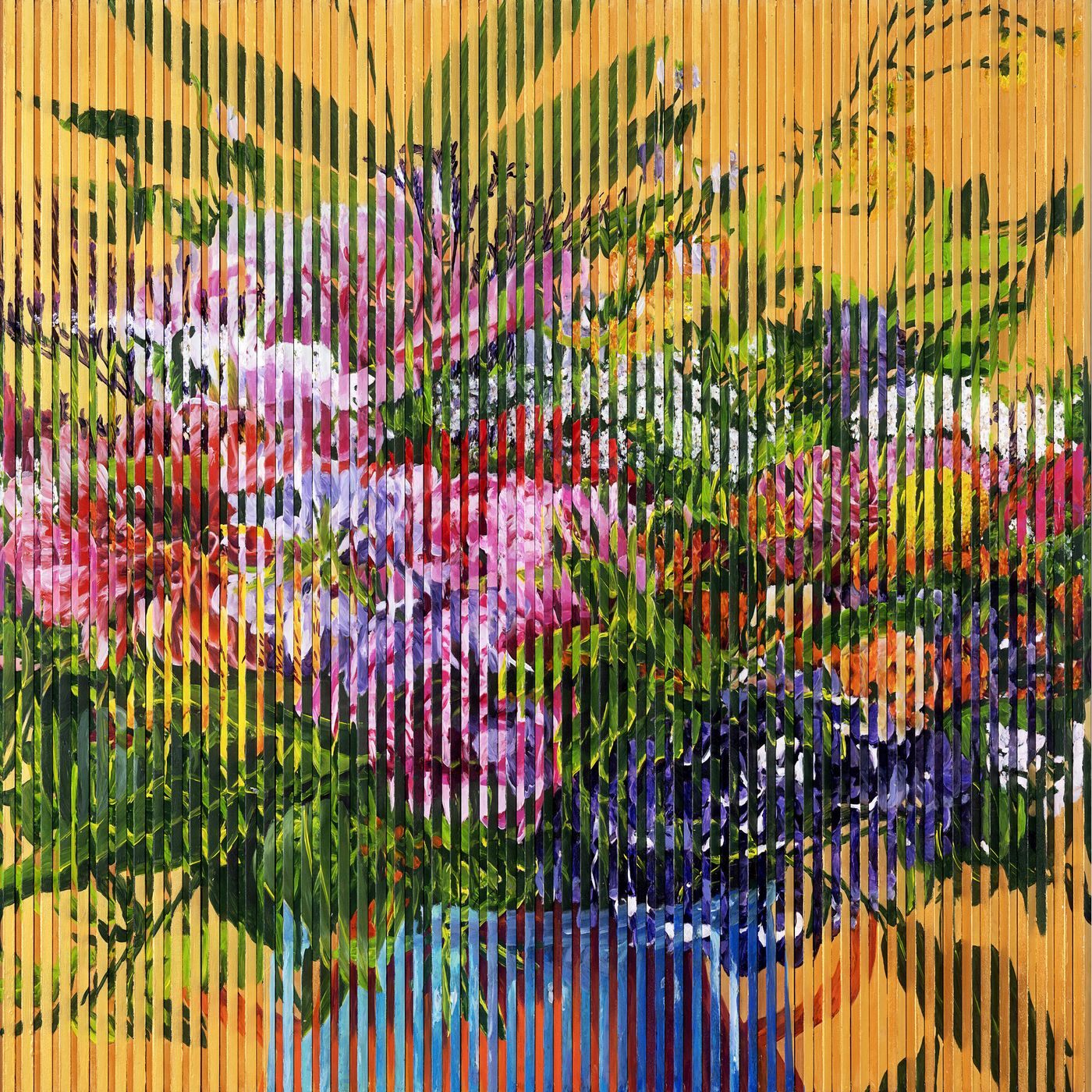
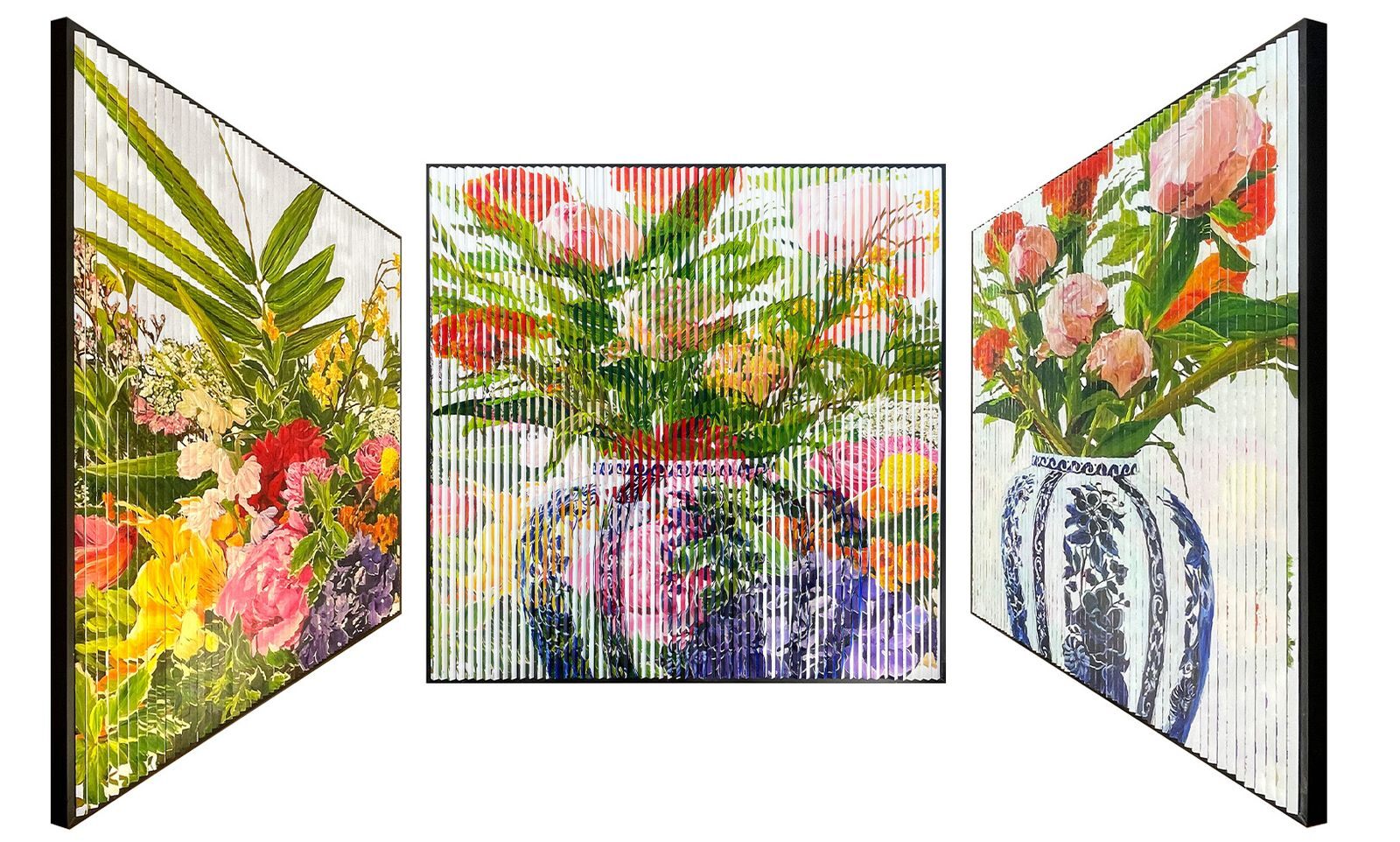
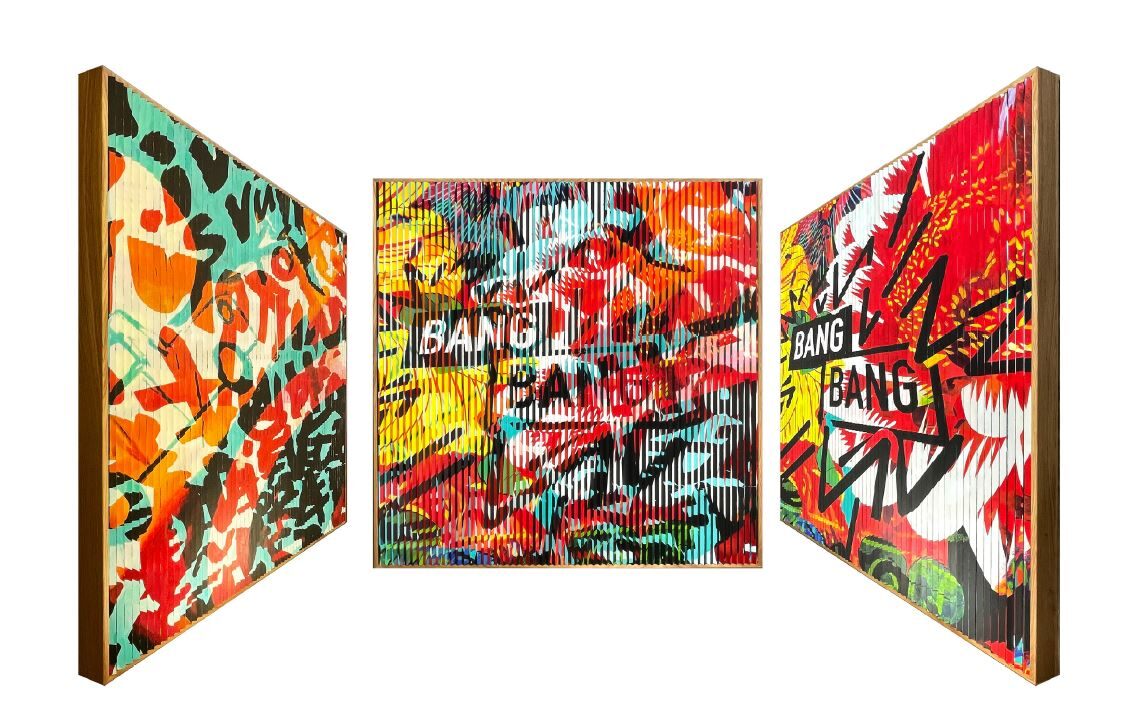
Every work in this room has at least three faces. Seen from the left, the slats show one composition; from the right, a second; straight on, the two interlace into a third image that exists only in the eye of the viewer. Kinetic art usually means art that moves. Here the painting stays still and the viewer does the moving.
Most of the panels are painted by hand, slat by slat, in acrylic, and Goren’s subjects are figurative and warm: bouquets, flags, letters. The result is less an optical experiment than a portrait that keeps changing its expression. A photograph can hold only one viewpoint, which is why many of the works are shown here from three positions: left, front and right.
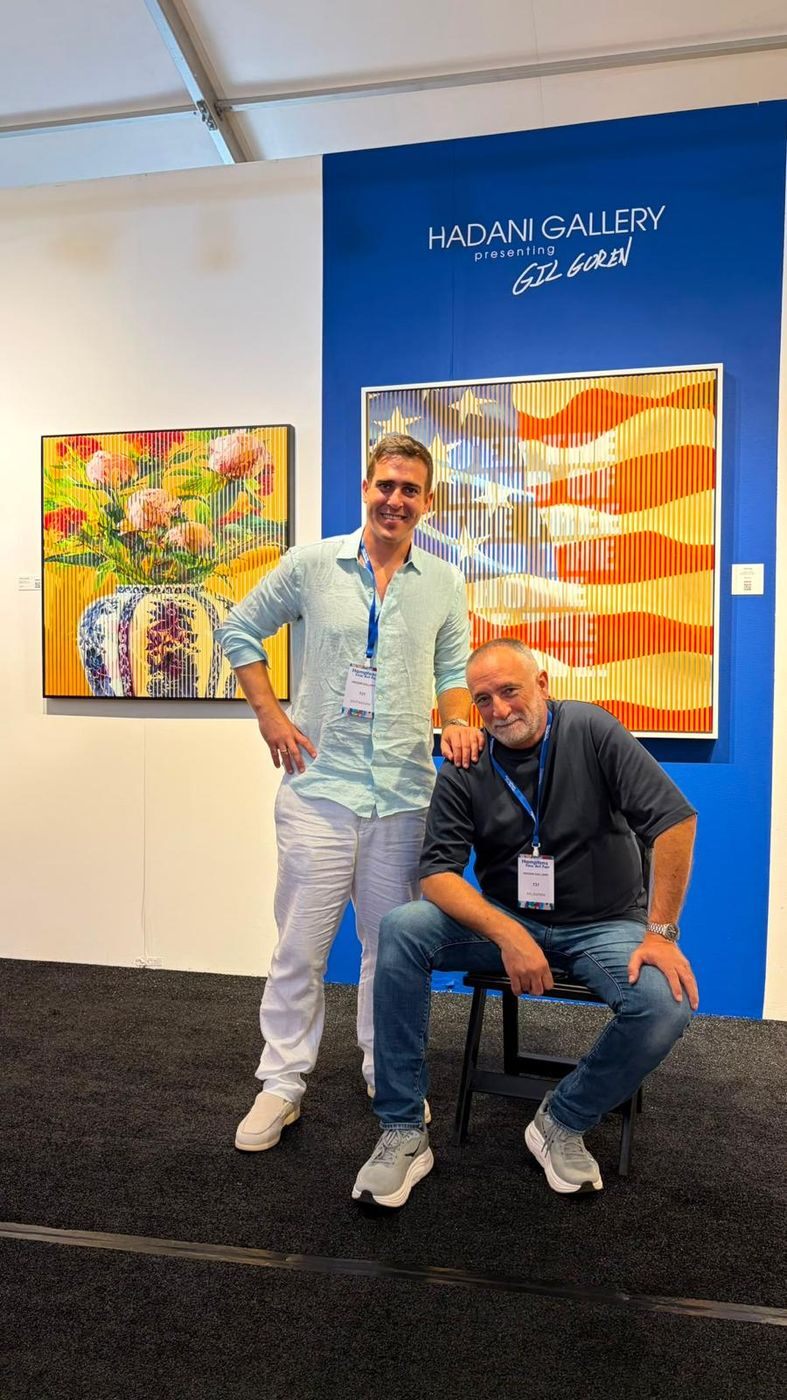
The room moves from Goren’s flowers to The Flag, the work that anchored Hadani Gallery’s stand at Hamptons Fine Art Fair in 2026, and on to the AMEN series, his portraits of Jerusalem, his museum solo show in Haifa and his commissioned HERITAGE walls.
Hadani Gallery will present Gil Goren at InScope Miami Beach, December 1–6, 2026, during Miami Art Week.
The Flower series
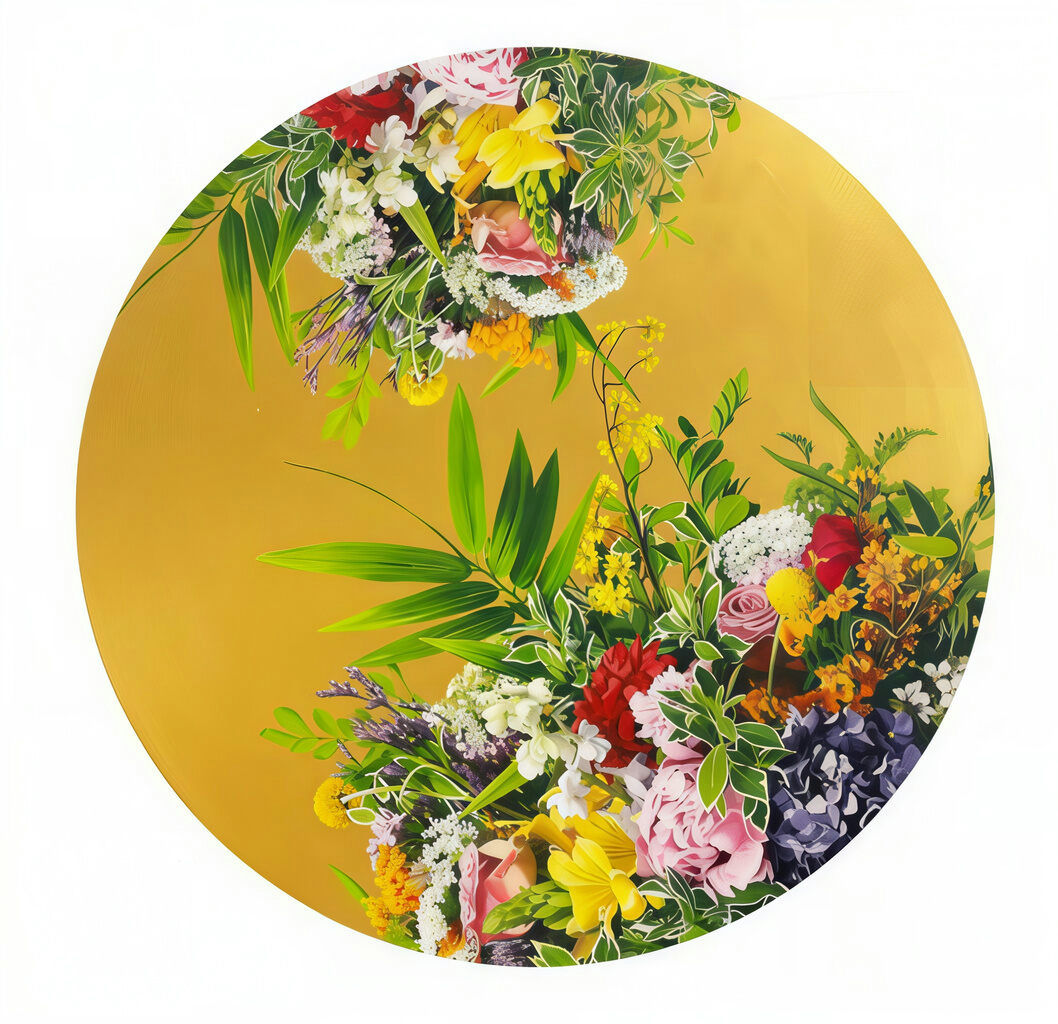
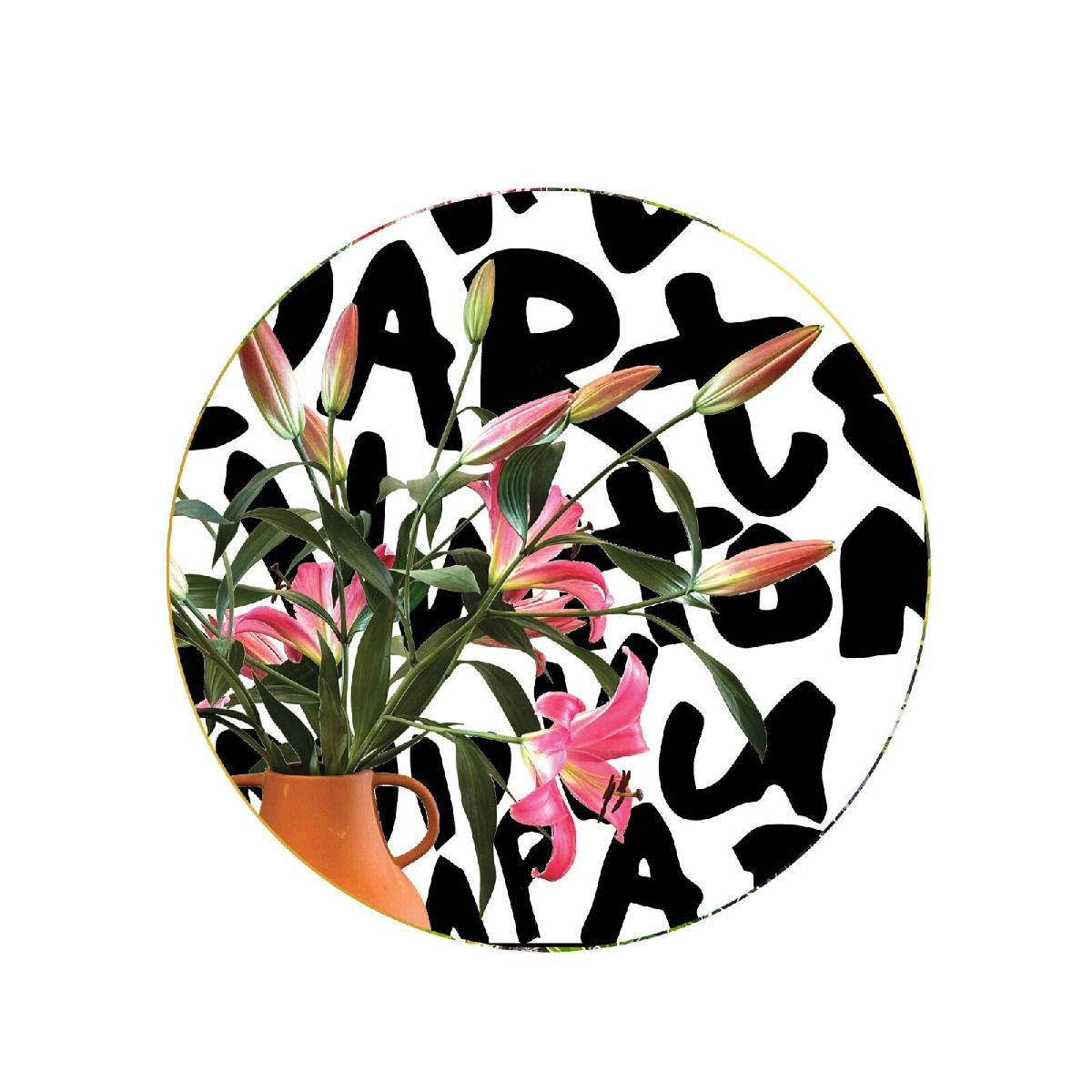
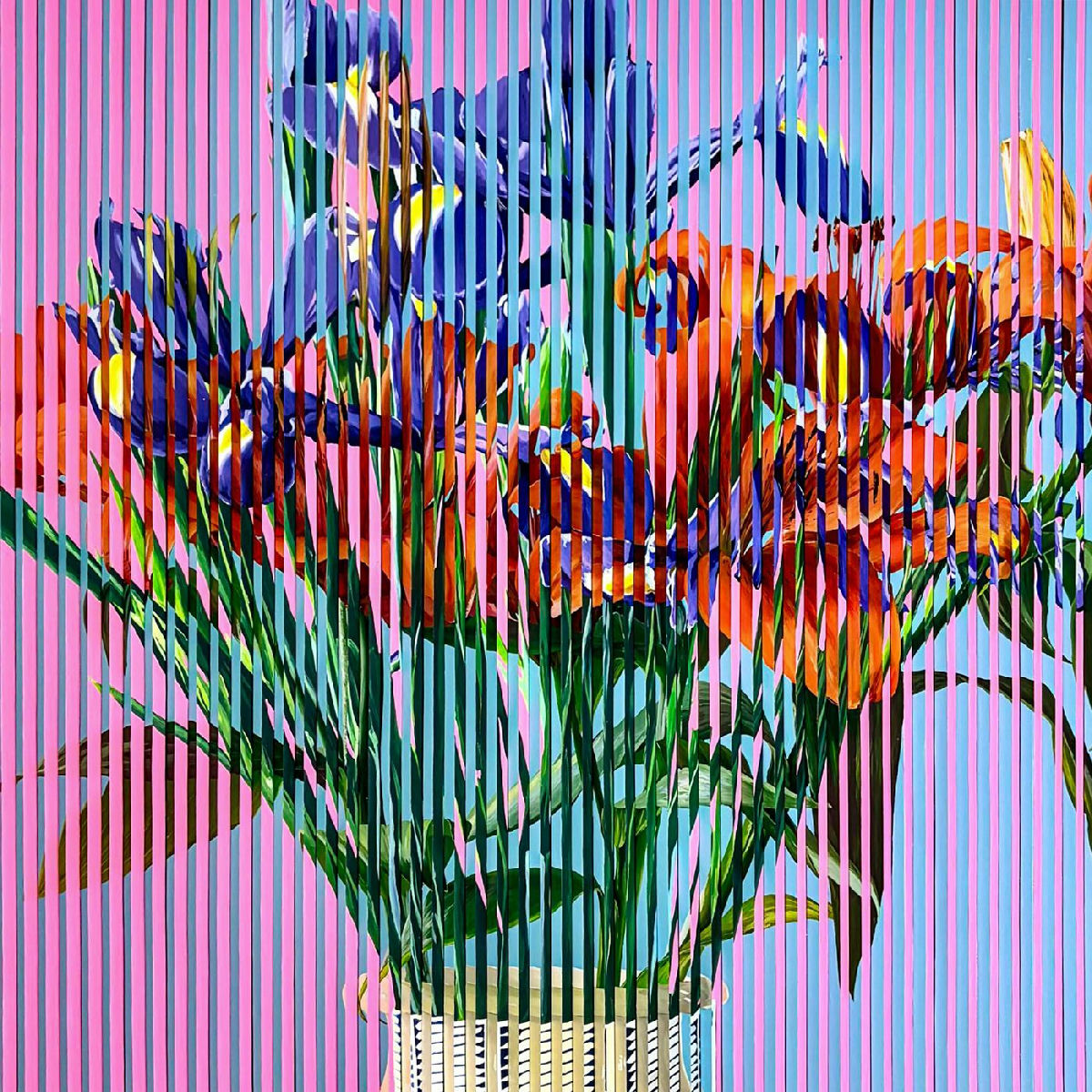
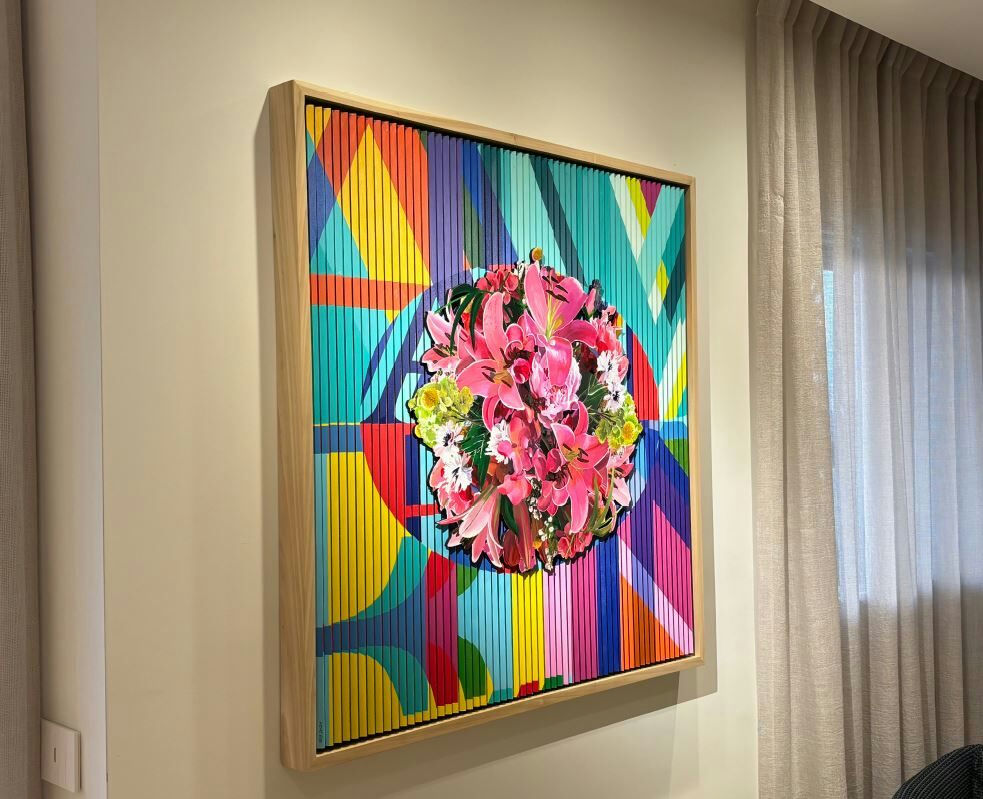
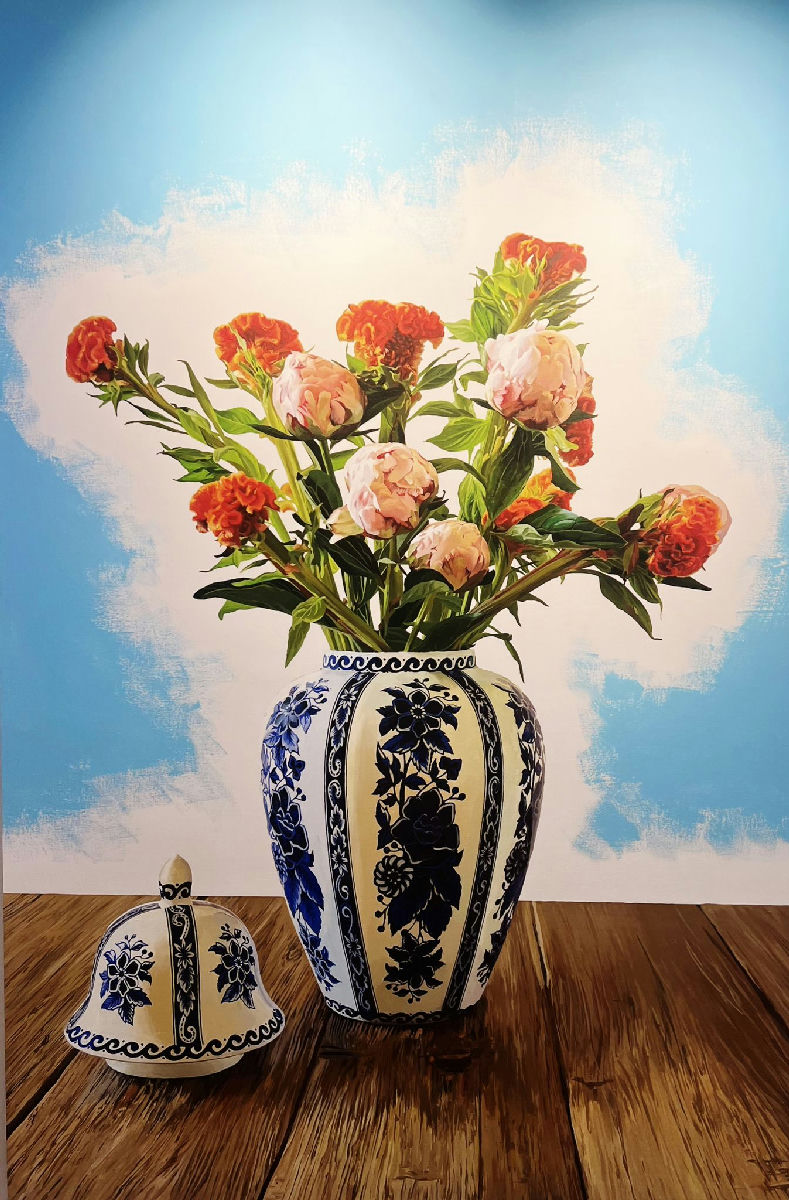
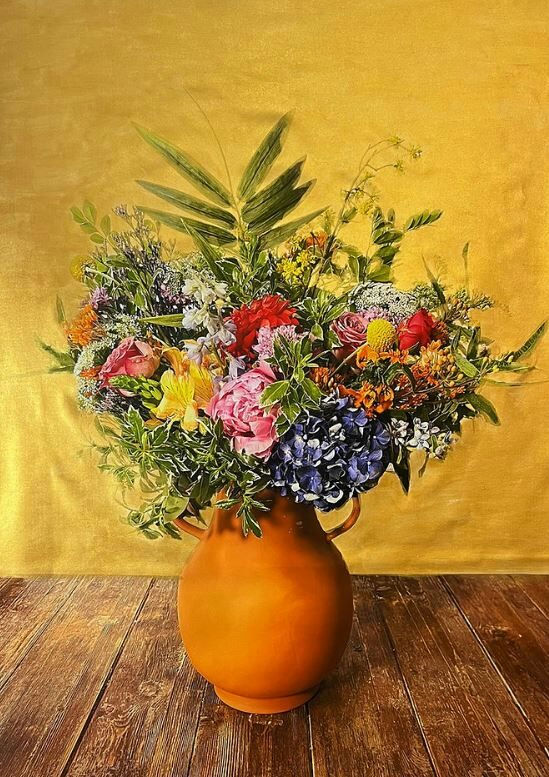
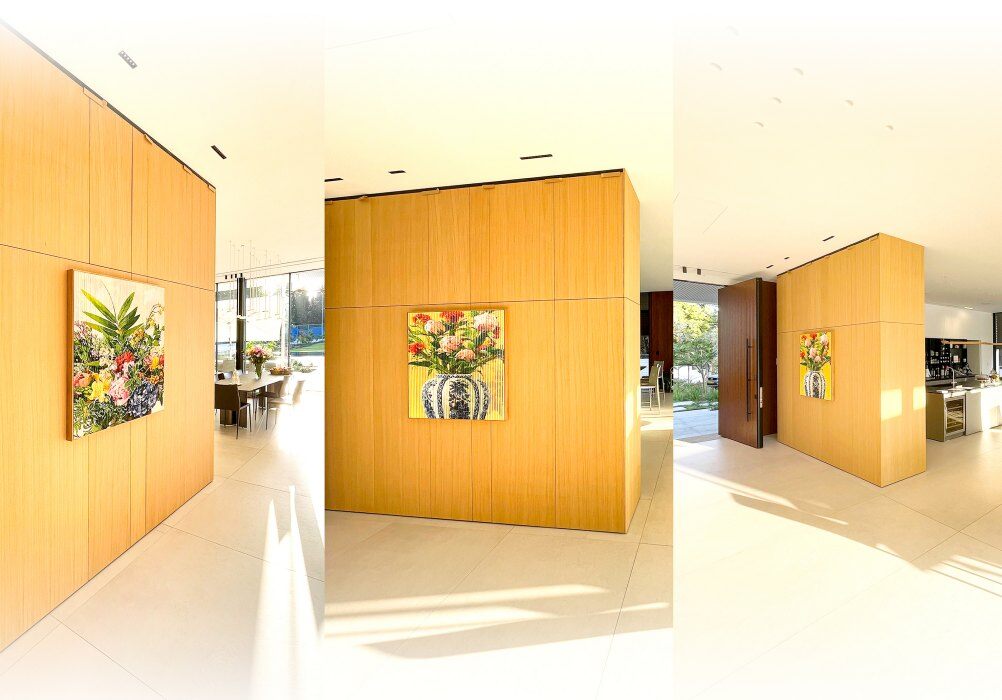
Flowers are the heart of Goren’s practice. Ranunculus, peonies, lilies, tulips and hydrangeas, often gathered in a blue-and-white porcelain vase, are painted in saturated color on golden, sky-blue, pink and white grounds. Each work holds two bouquets, one on each face of the slats, so the arrangement changes as you cross the room and shifts again as the light changes through the day.

The Flag
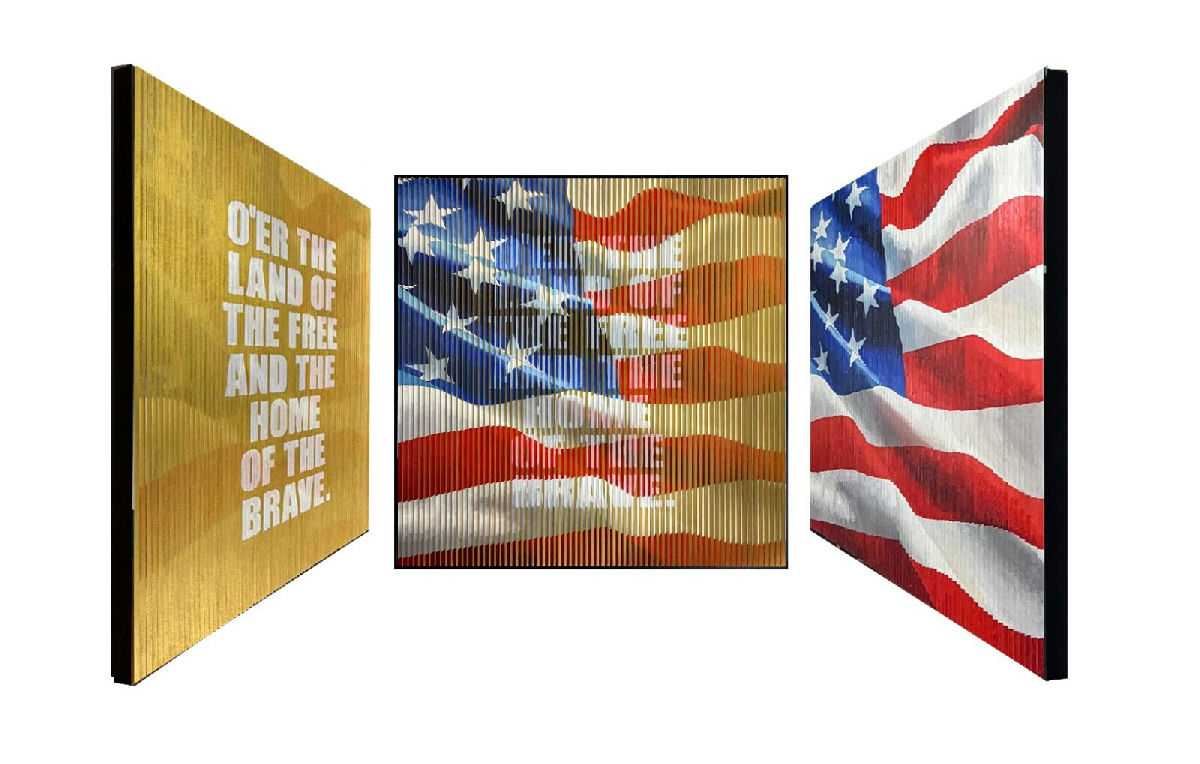
The Flag holds two paintings at once. From one side, the Stars and Stripes ripple like fabric in the wind. From the other, a field of gold carries a single line, “O’er the land of the free and the home of the brave,” the closing words of the American national anthem. Shown at Hamptons Fine Art Fair in July 2026, the summer of America’s 250th anniversary, the work was featured in The New Yorker on August 3, 2026.
AMEN
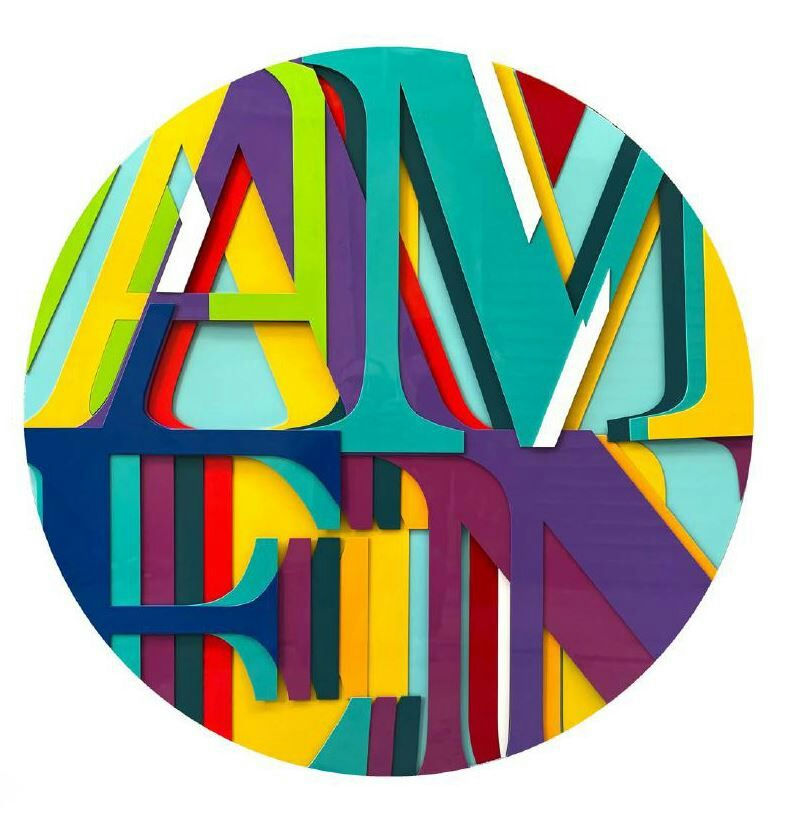
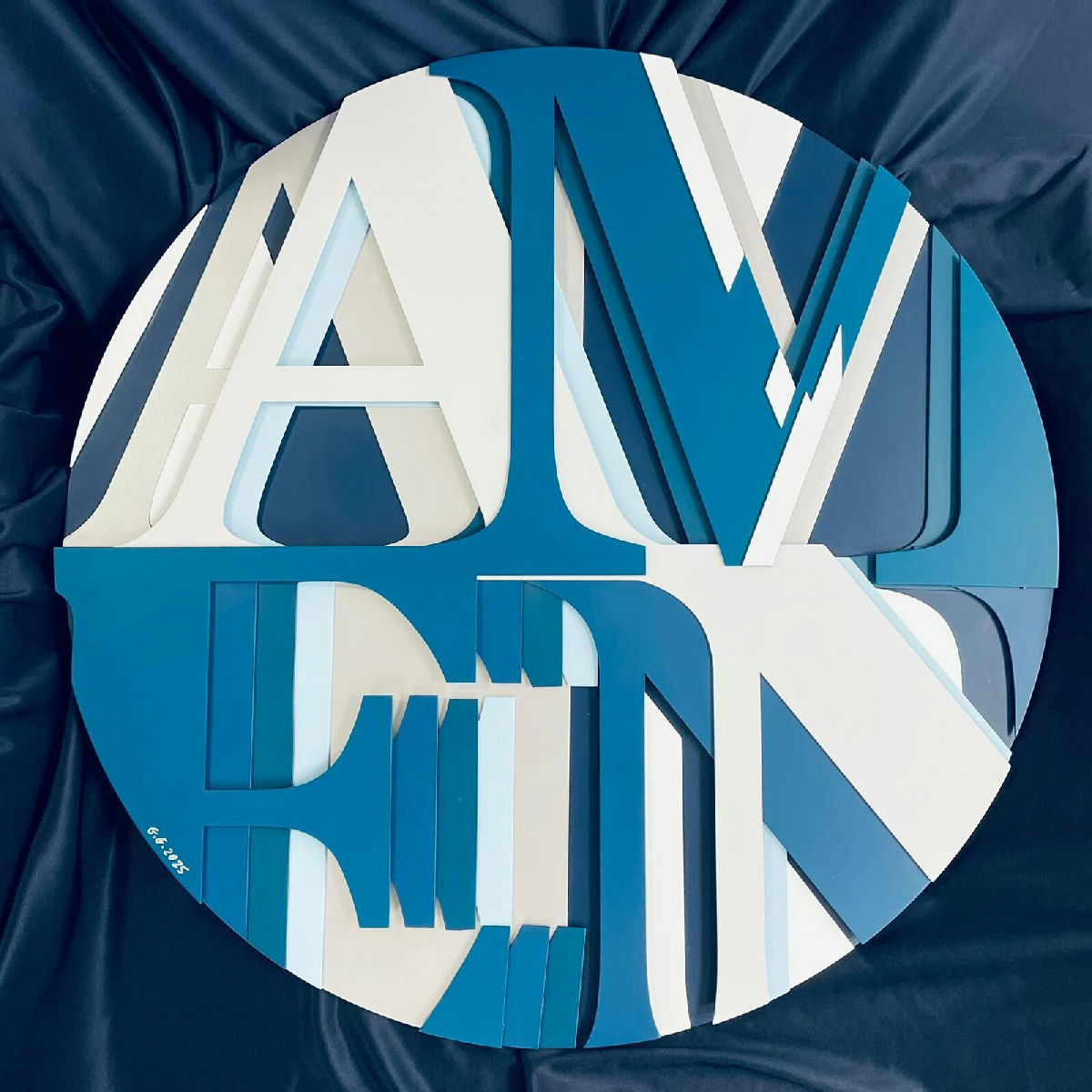
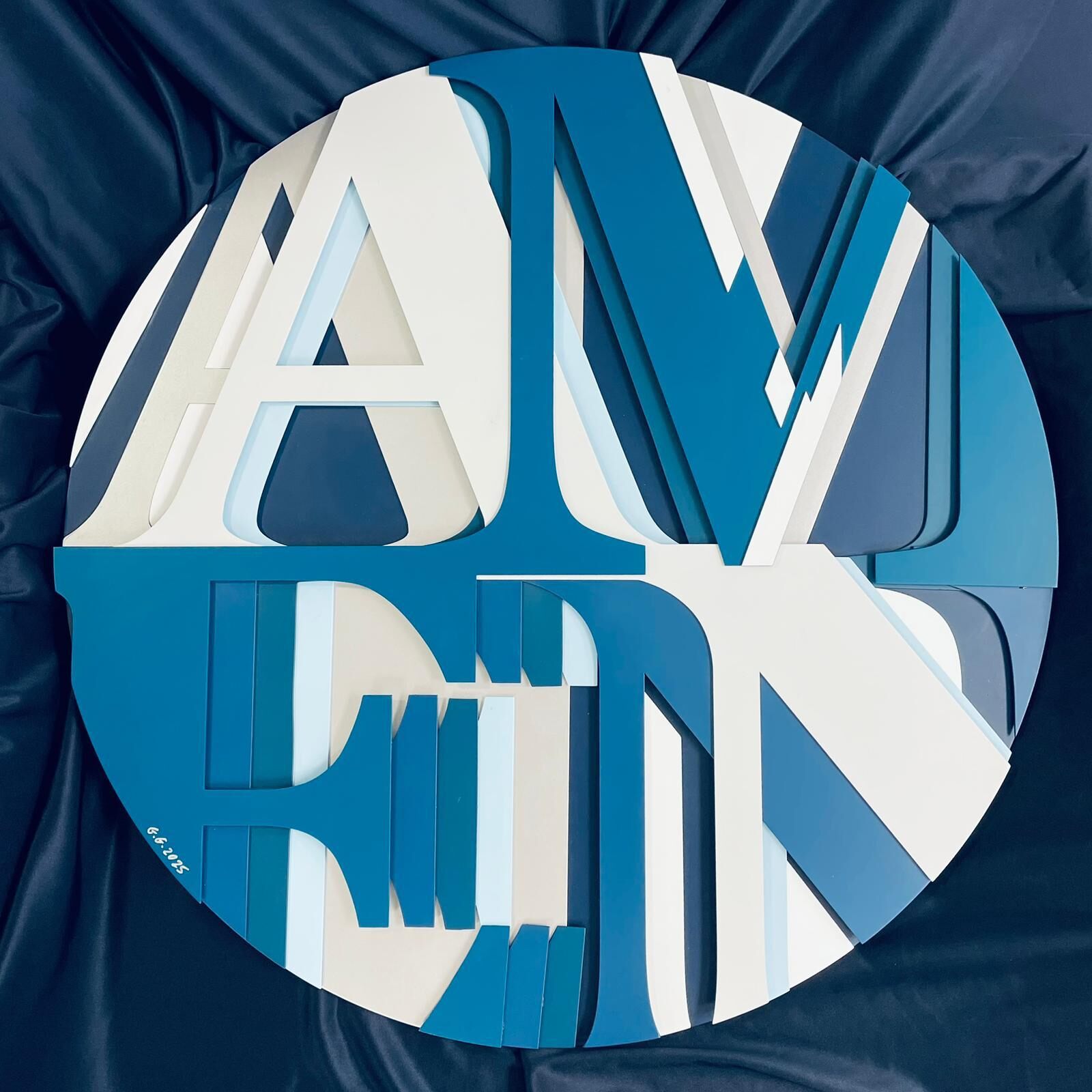
AMEN, a word shared by Judaism, Christianity and Islam, means “so be it”: a short act of agreement and gratitude. Goren returns to it across media. In the kinetic panels the letters split and recombine as you move, each version in its own palette. In the reliefs they are cut from nine layers of aluminum, set at different depths and finished in high-gloss automotive paint, so the word reads differently as the light changes.
Jerusalem, my love
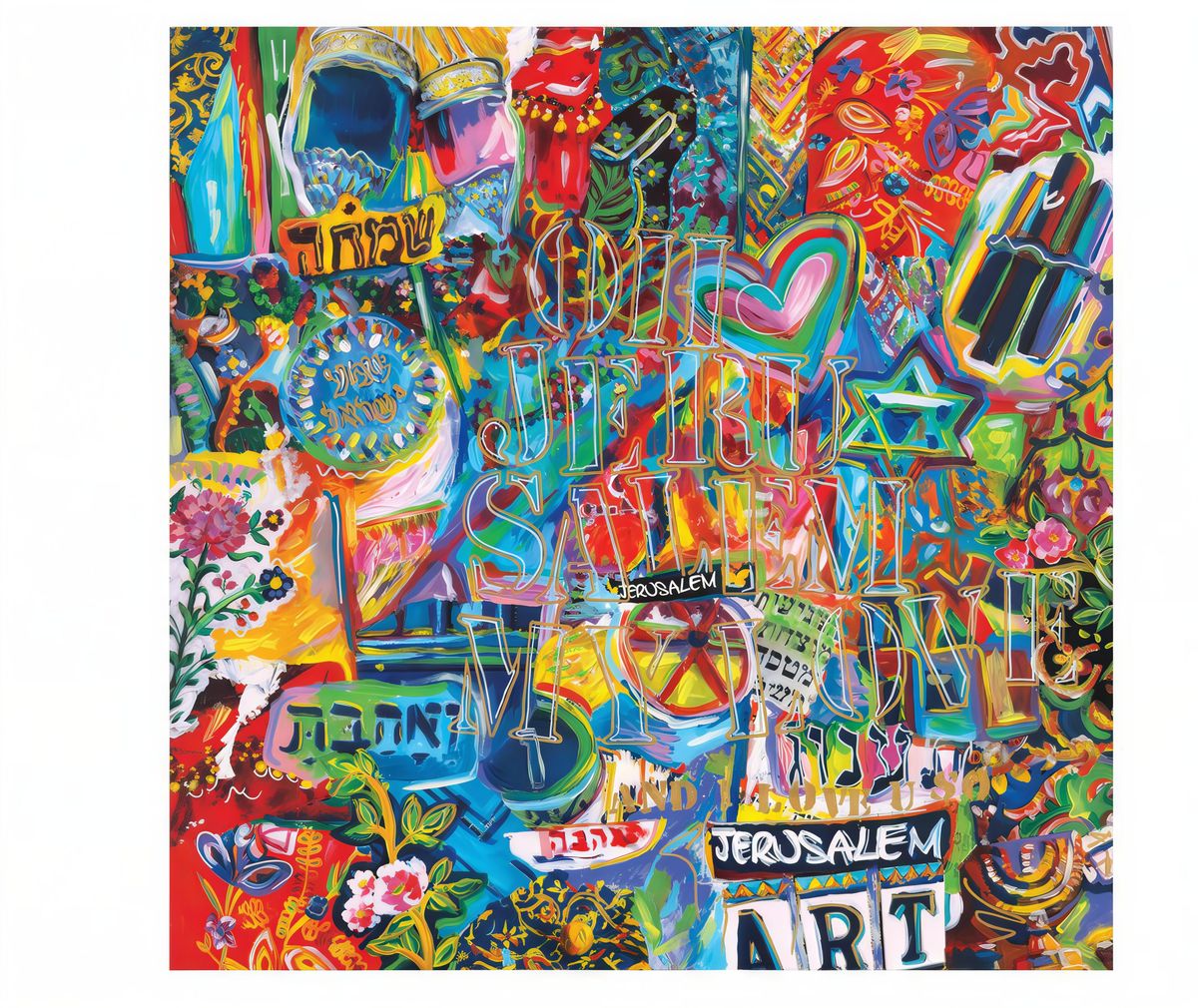
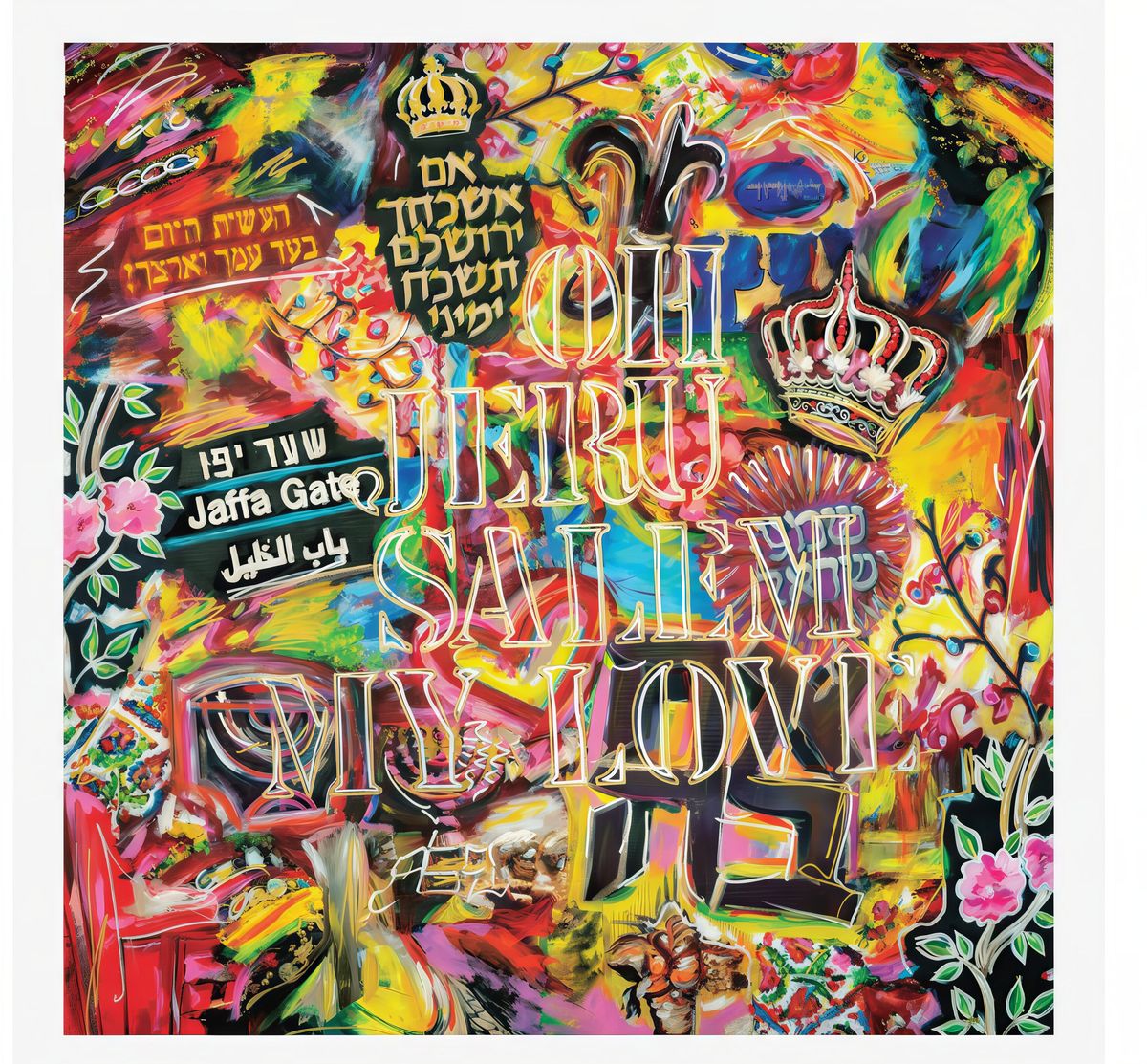
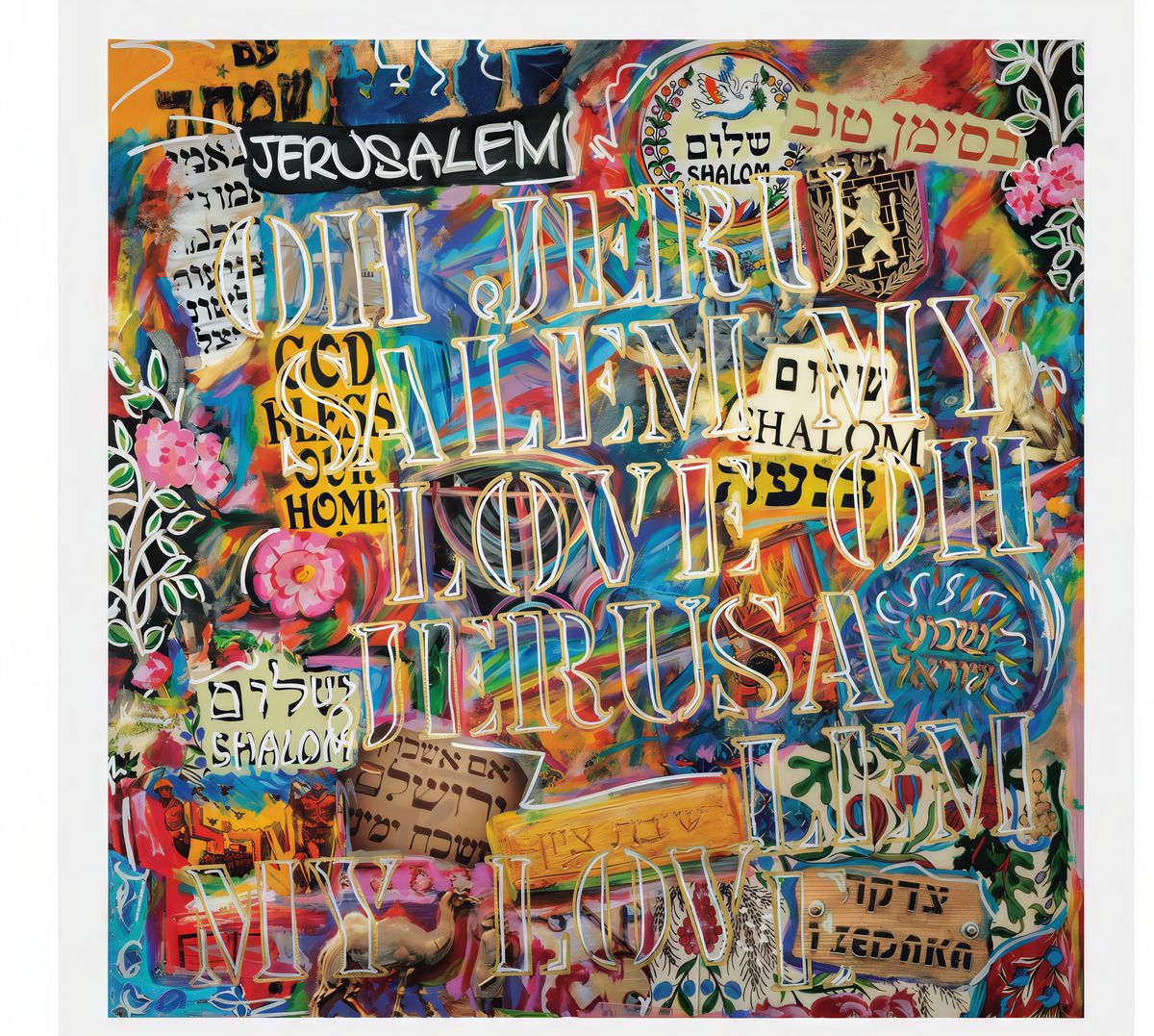
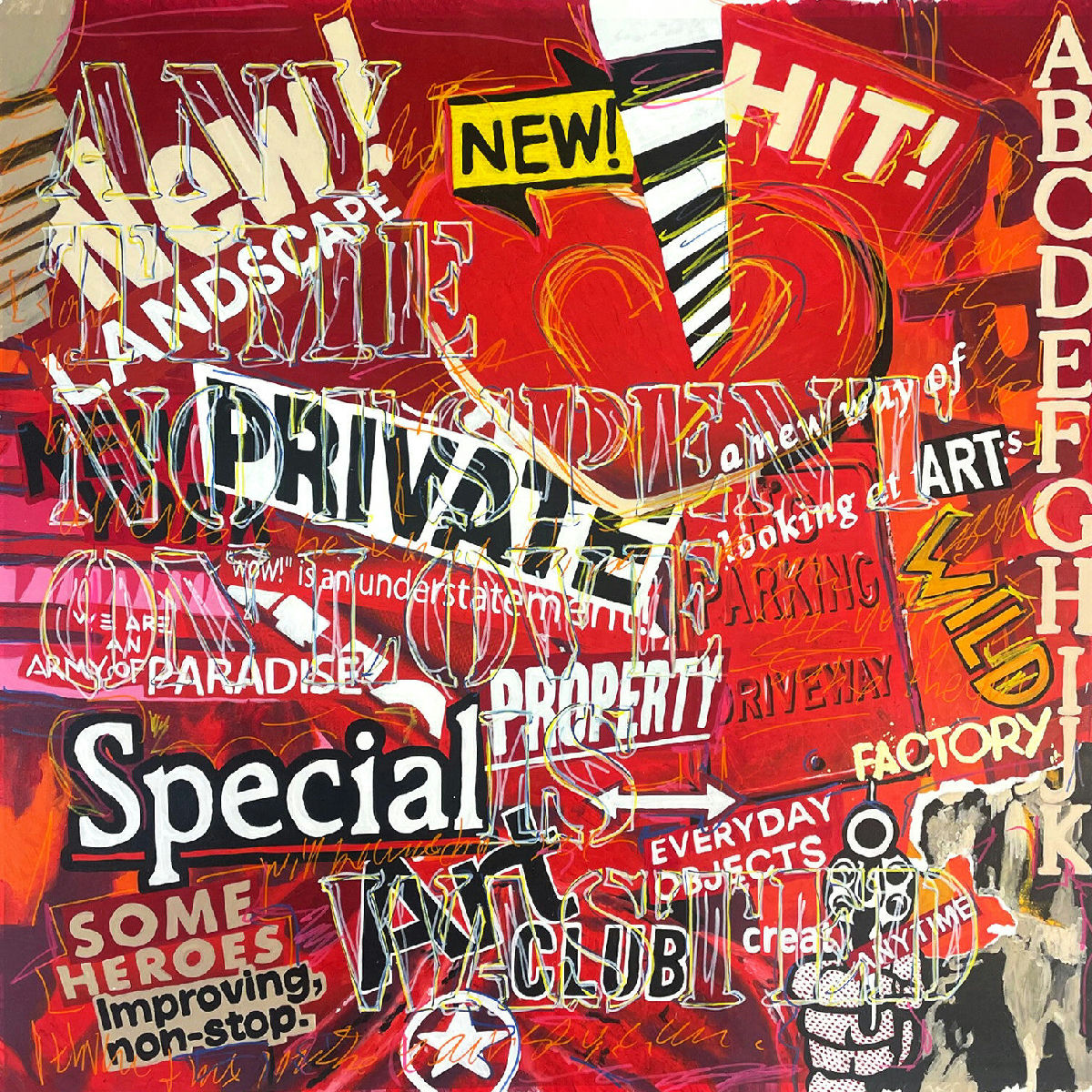
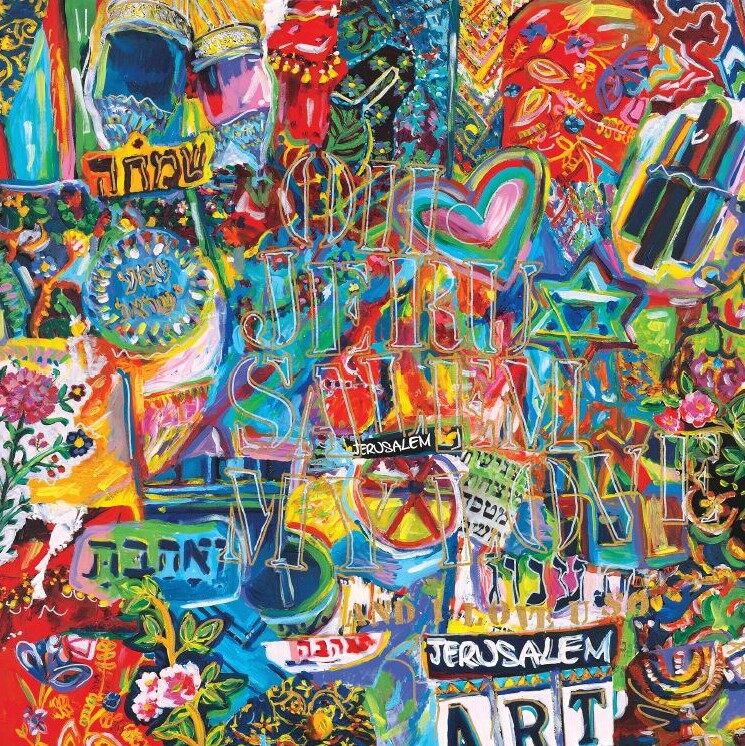
Goren’s Jerusalem paintings are dense, joyful portraits of a city. On canvas he layers Hebrew words such as simcha (joy) and ahava (love), street signs from the Jaffa Gate, crowns, menorahs, flowers and hearts, and runs the words “Oh Jerusalem, my love” through the whole surface in outlined letters.
Can You See Its Beauty, Hermann Struck Museum
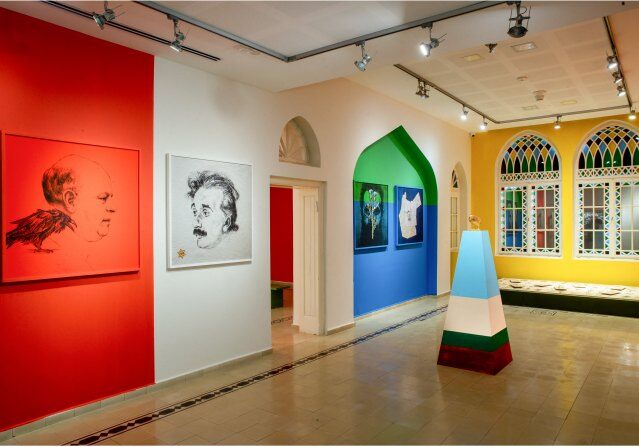
In 2025–2026 Goren presented the solo exhibition Can You See Its Beauty at the Hermann Struck Museum in Haifa, the former home and studio of the printmaker Hermann Struck, whose 1903 etched portrait of Theodor Herzl became the defining image of the founder of modern Zionism. Goren met that history in his own colors: in Herzl, a thistle grows across an etched-style portrait split into bands of green and blue.
Other bodies of work
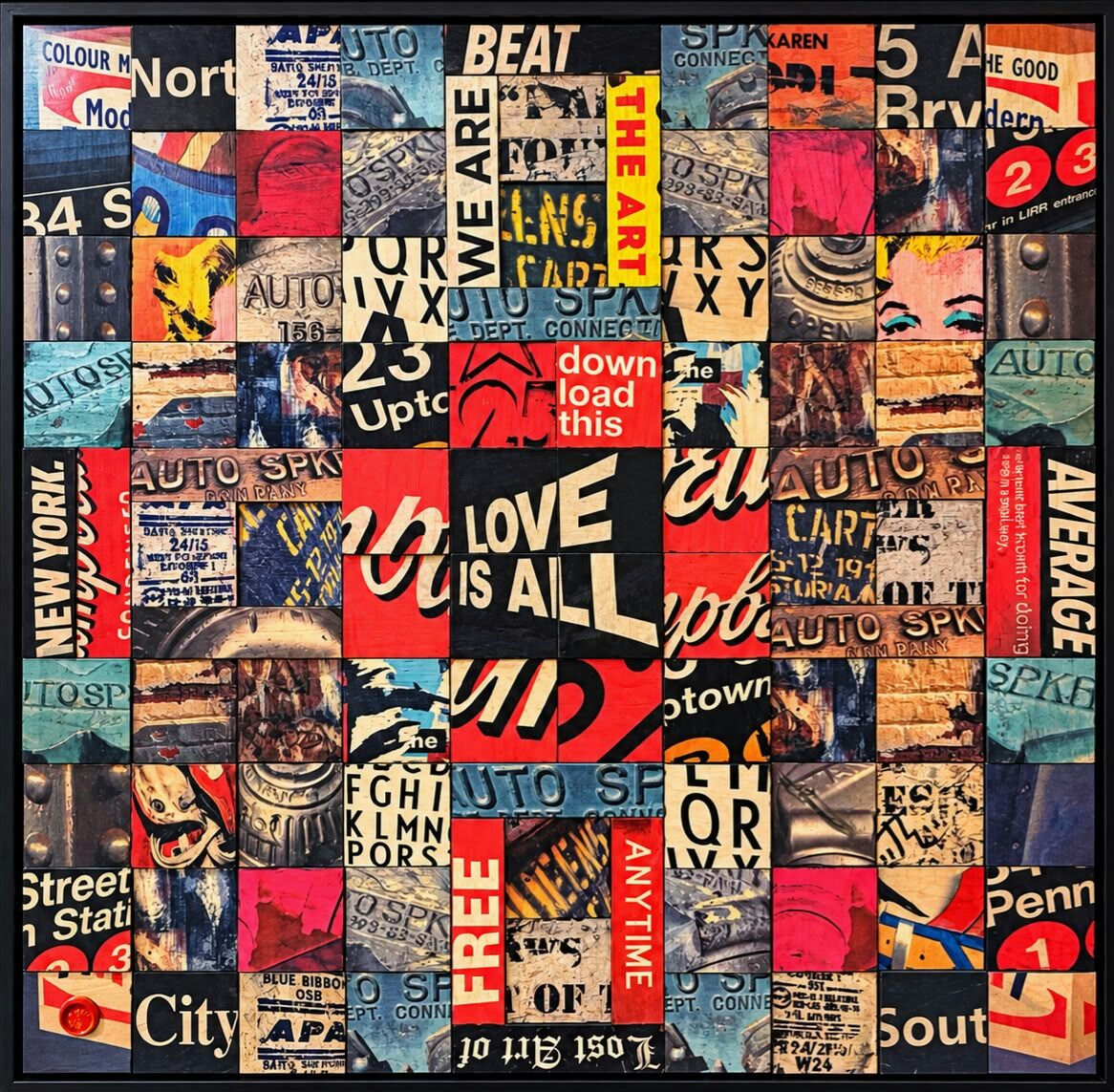
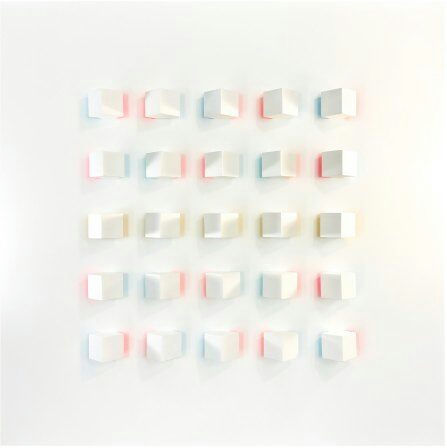
Beyond the flowers, Goren pushes the slats into a louder, urban register: Revolución and Purple Illusion layer tropical leaves, stars and vintage lettering, and Floral Dynamics bursts with comic-book “Bang Bang” lettering. Cubes reduces everything to twenty-five white wooden blocks whose hidden painted faces cast a soft colored glow onto the wall.
Living with the work
Because the works change with every step and every shift of light, they behave differently in each room they hang in, and rarely look the same twice.
About the artist
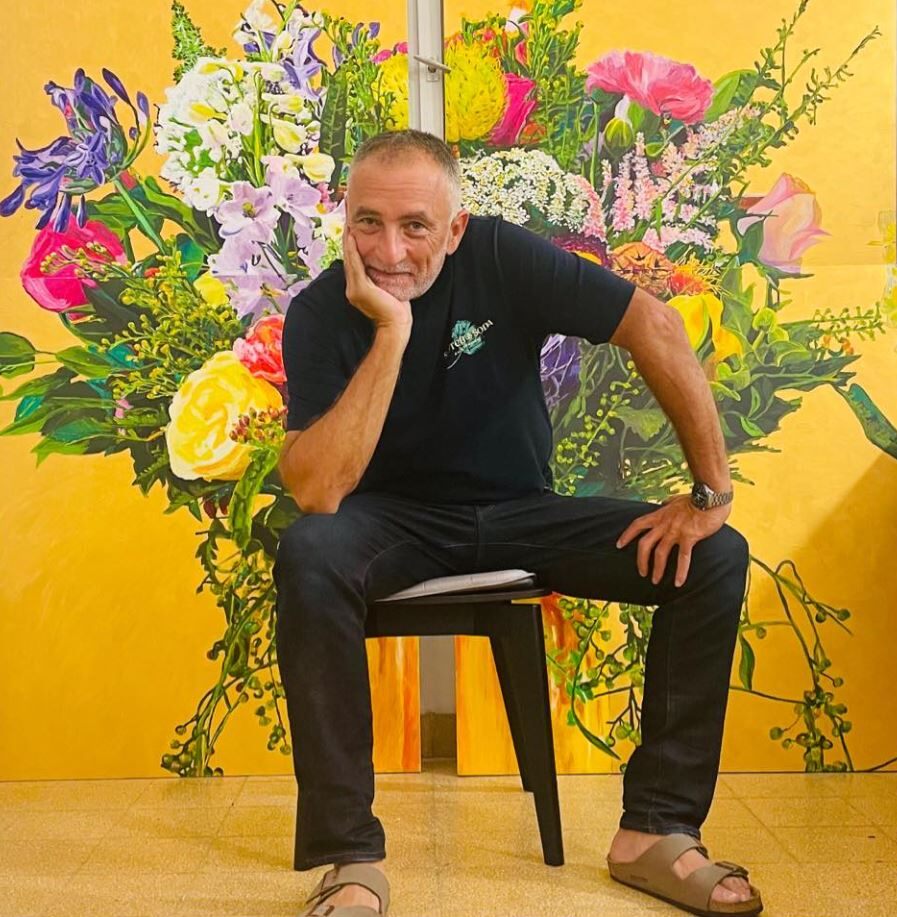
Gil Goren, born in Israel in 1960, works between Tel Aviv and Paris. After studying at the WIZO Academy of Design in Haifa and a career as a senior creative director at Yehoshua/TBWA, he turned to art and calls himself a Neo Pop Urban artist. Since his first solo show in 2014 he has exhibited in Israel, the US, Australia, Hong Kong, the Netherlands, Italy and Ibiza, held a 2025–2026 solo show at the Hermann Struck Museum, and in 2026 made his Hamptons debut with Hadani Gallery.
HERITAGE: commissioned works
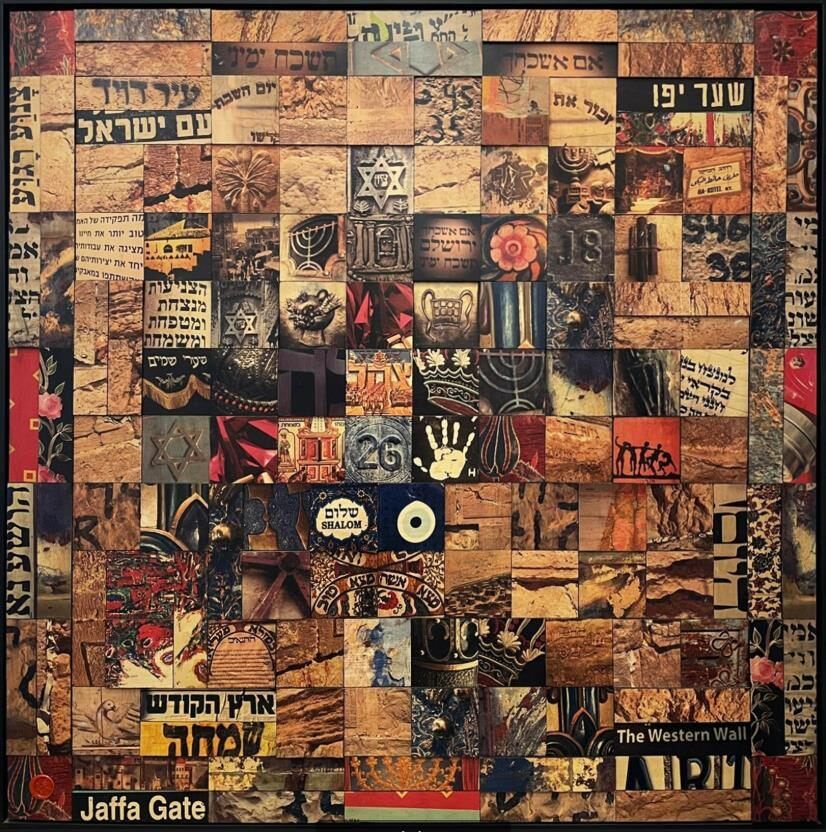
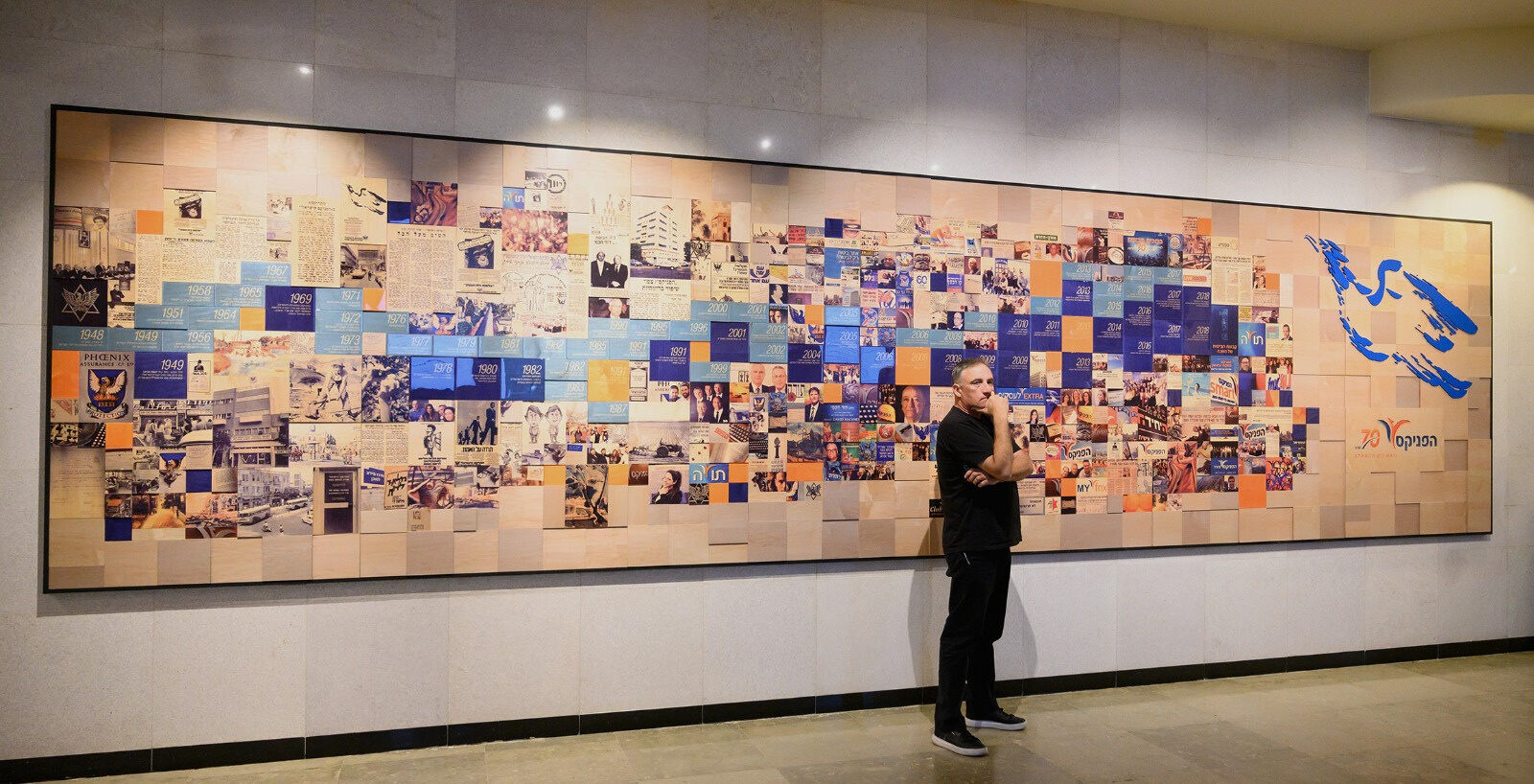
With Hadani Gallery, Goren created HERITAGE: bespoke works built from hundreds of designed wooden squares. Each square holds a moment, a symbol or a memory, and together they tell the story of a brand, a family business or a club, from its founding to today. Recent commissions include an 800 × 200 cm wall for the Phoenix building and a 400 × 170 cm work for the Melisron building.
About Hadani Gallery
Hadani Gallery was founded in 2001 by Irit Hadani to champion artistic excellence, originality and meaningful engagement through contemporary art. Based in Tel Aviv, on the Mediterranean shoreline within the Sea & Sun complex, the gallery has taken part in exhibitions and international art fairs across Europe, Asia and the United States. Its program is guided by one belief: art is energy, and therefore it should be joyful.